Bonus depreciation is the provision that lets an operator deduct a large percentage of a refuse truck's purchase price in the year the equipment is placed in service, rather than spreading that deduction across five or seven years of standard MACRS schedules. Unlike Section 179, bonus depreciation is not capped at the business's taxable income for the year, which means it can generate a tax loss that carries forward, making it useful even in years where taxable income is modest or the total equipment purchase is large relative to earnings.
The percentage available under bonus depreciation has changed over time. It was 100 percent through 2022, then stepped down 20 points each year beginning in 2023 (80 percent in 2023, 60 percent in 2024, 40 percent in 2025, and so on under current law). Your accountant will tell you what percentage is available for the year you are placing equipment in service. We help structure the financing so the truck is delivered and operational in the right tax year to capture the rate you are planning for.
Bonus Depreciation and Equipment Financing Together
The same principle that makes Section 179 work with financing applies here: you do not need to pay cash to claim the depreciation. A truck financed with a loan or a qualifying lease is still owned by the borrower (or treated as owned for tax purposes in a finance lease), which means the full acquisition cost is depreciable. The government lets you deduct the cost while the lender lets you spread the payment over several years.
The practical result is that a refuse operator who buys a $200,000 packer truck in a year with 60 percent bonus depreciation can deduct $120,000 against taxable income in year one, while actually paying perhaps $4,000 per month on a loan. The deduction is front-loaded; the cash outflow is spread. When the deduction exceeds taxable income, the resulting loss is a net operating loss that can be carried forward to offset income in future years under current tax law.
This front-loading is a real benefit for operators in high-income years who are adding trucks to grow, because the deduction directly reduces the tax bill in the year the capital expenditure is made rather than trickling in over years when income may be lower or higher in unpredictable ways.
Which Refuse Equipment Qualifies for Bonus Depreciation
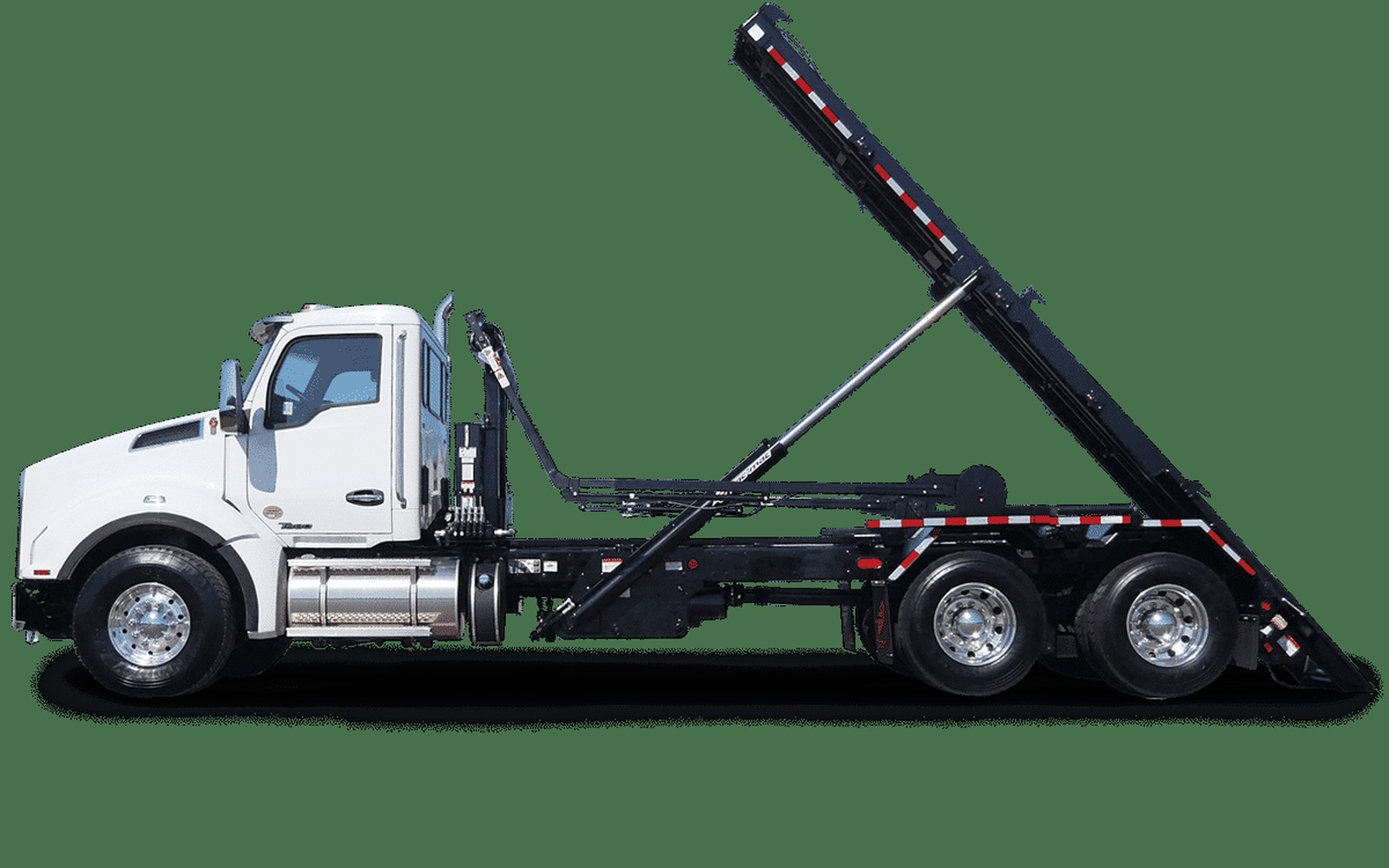
Most tangible personal property with a depreciable life of 20 years or less qualifies for bonus depreciation. Commercial refuse trucks, garbage truck bodies, roll-off hoists, and ancillary equipment like containers all fit within this definition. The equipment must be new to the taxpayer, which includes used equipment that the taxpayer has not previously owned or used, just as with Section 179.
Common qualifying equipment in our space includes rear-load garbage trucks, roll-off trucks, automated side loaders, and compactor trucks. Large purchases, such as adding an entire route's worth of equipment in one tax year, can generate very large bonus depreciation deductions, which is why some operators time fleet expansions strategically to coincide with high-income years where the deduction produces the most value.
One thing to verify with your accountant: certain listed property and vehicles subject to luxury auto limits have special rules that cap the depreciation amount per year. Heavy-duty trucks (GVWR above 6,000 pounds) generally avoid the luxury auto caps that apply to passenger vehicles. Refuse trucks are unambiguously in the heavy-duty category, so the annual caps that limit deductions on light vehicles do not apply.
Bonus Depreciation vs. Section 179 in Practice
Both provisions produce a first-year deduction, but they work differently in the details. Section 179 is elected, capped, and limited to taxable income; it cannot produce a tax loss. Bonus depreciation applies automatically to qualifying property (you can opt out, but the default is on), is not capped at the annual dollar limit Section 179 has, and can produce or increase a net operating loss.
For most single-truck purchases where the operator's taxable income comfortably exceeds the truck's cost, either provision produces the same outcome. For larger capital years or operators with timing considerations on loss carryforwards, the combination of the two provisions, or the strategic choice between them, is a planning question for your accountant. Our role is to provide financing that closes before the equipment timing constraint, whether that is a year-end deadline or a quarter-end target.
Operators using a refuse truck lease should verify which type of lease they are signing. An operating lease produces no depreciation for the lessee; a finance lease or dollar buyout lease does. Getting this wrong means the tax plan designed for the equipment purchase does not work as expected. We are explicit about the lease classification in every deal we structure.
Finance Equipment Before the Year Closes
Equipment placed in service before December 31 generates the deduction for the current tax year. If you are planning to add a truck and the timing matters for your tax position, moving quickly is the whole game. We can often close a deal and get a truck delivered within two weeks of a completed application. Talk to us and your accountant at the same time, not sequentially. Operators running commercial waste collection routes who are planning growth into the next contract period are often the best candidates to use bonus depreciation strategically. A refuse truck loan is the simplest structure to preserve full depreciation eligibility.
Route Questions