

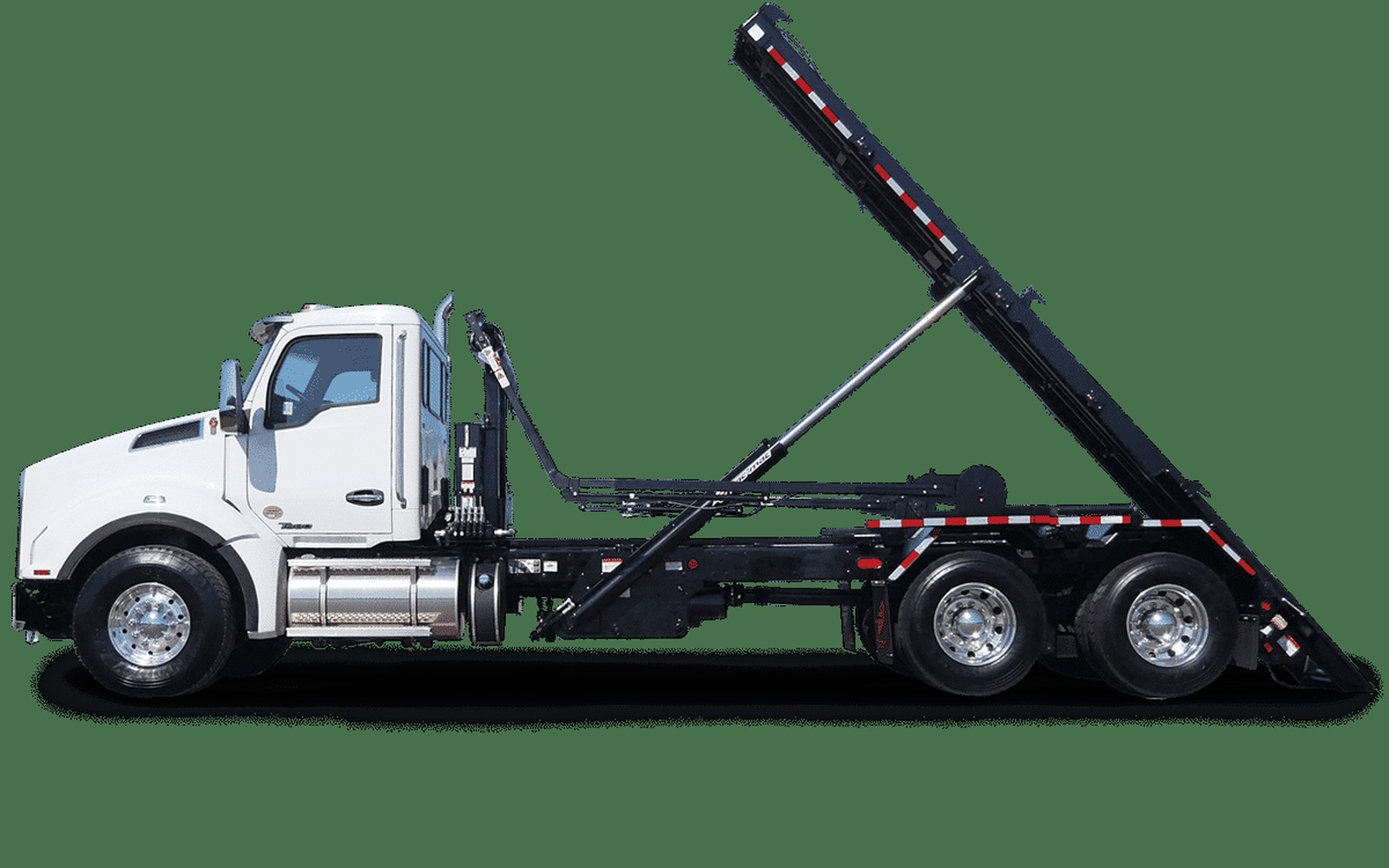
Roll-off accounts run on a pull-and-replace cycle. A container goes out, sits on a job site or at a commercial account, fills up, and gets swapped. The truck is the link in that chain, and the more trucks an operator has running, the more containers they can cycle and the more accounts they can hold. We finance roll-off trucks for operators ready to expand that cycle, add a second truck to the yard, or replace a worn unit before it costs more in downtime than a new payment would.
The roll-off segment has strong economics because the revenue is container-driven, not just truck-driven. A single roll-off truck servicing 20 to 30 active containers can generate meaningful recurring revenue on a predictable schedule. That revenue profile is exactly what equipment lenders want to see, and it is why roll-off financing is often more straightforward than it seems for operators who are new to borrowing against commercial trucks.
Our roll-off truck financing starts at $50,000 and is application-only up to approximately $400,000. Most used roll-off trucks fall in the $80,000-$160,000 range depending on age, hoist type, and chassis condition. New configurations with a heavy-duty hoist on a current chassis run $200,000 to $300,000 or more. B and C credit operators are considered. Funding in one to two weeks is the standard timeline.
Roll-Off Truck Configurations
A roll-off truck is a chassis fitted with a hoist mechanism that slides containers on and off the truck bed. The two primary hoist types are cable-hoist (traditional) and hooklift (sometimes called multilift or ampliroll). Each serves the same basic function but handles containers differently and suits different operational models.
Cable-hoist trucks use a cable drum and telescoping frame to pull open-top containers onto the truck frame, which tilts during the pickup sequence. They dominate the construction and demolition debris market and are the standard configuration in most established roll-off operations. A cable-hoist roll-off handles the 20-yard, 30-yard, and 40-yard open-top containers that are the core of most C&D and general refuse accounts.
Hooklift trucks use a hydraulic arm with a hook that engages a mounting bar on the container, allowing pickup and drop without the cable mechanism. The hooklift's advantage is faster cycle time at the stop and compatibility with multiple container types, including flatbeds, dump bodies, and sealed boxes. Operators in recycling, organics, or mixed-service environments often favor hooklifts for the flexibility. A hooklift truck can be a roll-off vehicle, a dump truck, and a flatbed hauler depending on which body is currently mounted.
Chassis selection for roll-off work typically runs to Class 7 and Class 8 trucks. Peterbilt, Mack, Kenworth, Freightliner, and International chassis are all common in roll-off configurations. The chassis frame spec, fifth-wheel capacity, and rear-axle rating need to match the anticipated container weight and size. Operators running 40-yard containers on heavy debris should be working with a tandem- or tri-axle setup capable of handling gross loads in the 60,000-pound range.
How the Financing Works
Roll-off truck financing follows the same application-to-funding path as other commercial truck lending. The collateral is the completed truck, identified by VIN. The payment is fixed or structured on a TRAC lease if the operator prefers a managed residual. Term lengths range from 36 to 84 months depending on the borrower's preference and the lender's appetite for the credit and collateral combination.
For operators building a roll-off fleet from scratch, we also cover used containers through separate transactions or as part of a bundled purchase. If a dealer is selling a truck and 15 containers together, that transaction can sometimes be structured as a single financed deal covering both the vehicle and the container inventory, depending on the lender and transaction size.
Operators interested in the roll-off truck financing options we place have found that the container revenue model helps underwriting. When bank statements show consistent pickup fees from multiple container accounts, the revenue pattern is clean and predictable, which lenders like.
For operators who already own roll-off trucks with equity, a Sale-Leaseback on the existing fleet generates cash to fund the container inventory expansion or to cover operating costs during a new contract ramp-up. Operators new to the business may qualify through our startup financing track, and those with past credit challenges should review the bad-credit truck financing program before assuming they cannot get approved.
Where Roll-Off Operators Win Accounts
Construction and demolition debris is the largest roll-off revenue category. General contractors, demolition subs, and roofing companies need container service on virtually every project, and the relationship between the roll-off operator and the contractor is often long-standing. Operators who serve construction and demolition debris haulers markets know that showing up with clean equipment and reliable pickup service is what keeps the contractor calling back.
Commercial dumpster rental (permanent container accounts at restaurants, retailers, and office buildings) is the second major roll-off market. These accounts are lower-margin than construction but more predictable. Operators who mix C&D and permanent commercial accounts build a revenue base that weathers the project cycle.
Junk removal is the third primary roll-off application. Companies offering full-service removal need a truck that can drop, fill, and pull efficiently, and a well-maintained roll-off rig makes a professional impression on residential and commercial junk accounts. Operators in this segment sometimes start with a single truck and scale to a fleet as accounts grow.
Route Questions


