The route does not care that the company is three months old. A contract is a contract, and the truck has to show up regardless of how long the LLC has been on file. New waste hauling businesses need equipment financing just as much as established operators, and the path to approval exists even when the business has no credit history, no filed business tax returns, and bank statements measured in weeks rather than years.
We work with startup refuse haulers on first-truck financing, whether that is a used rear-loader picked up from a dealer closing out fleet equipment or a new unit from a body manufacturer. The personal credit profile of the business owner carries significant weight in the approval process for new entities, and a signed contract or letter of intent from a customer strengthens the file considerably. Junk removal companies transitioning into formal waste hauling operations and contractors setting up a waste subsidiary for their primary business are two common applicant profiles we see.
Who Qualifies as a Startup Hauler
For financing purposes, a startup is typically a business with fewer than two years of operating history, or a new entity with no operating history at all. The core challenge is that lenders cannot review years of business performance, so they rely more heavily on the owner's personal financial track record and the tangible evidence that the business has real customers or contracts lined up.
The strongest startup applications we see share a few common traits. First, the owner has a personal credit score above 660, ideally above 700. Second, there is documentation of revenue-generating activity: a signed hauling contract, a letter of intent from a municipality or property management firm, or a customer commitment letter. Third, the operator can demonstrate relevant experience, whether through prior employment in the waste industry, a professional license, or a business plan that shows they know the route economics of the market they are entering.
None of these factors is individually required, and the absence of one can sometimes be offset by strength in another. An owner with a 720 credit score and three months of bank statements showing startup deposits will often qualify for a used truck with modest down payment. An owner with a thinner credit profile who has a signed contract in hand is a different file but can still reach approval with the right structure.
Equipment Choices for First-Time Operators
Most first-truck purchases by startup haulers are used equipment. A used garbage truck in serviceable condition at 40 to 60 percent of new-unit cost keeps the monthly payment at a level the early-stage revenue stream can support. The route income has to cover the loan payment, fuel, insurance, maintenance, and driver pay. A lower equipment cost gives the operator more room to run lean in the first year while the customer base builds.
That said, some startups finance new equipment, particularly when they have a signed contract that guarantees a minimum tonnage and the payment is sized accordingly. A new unit from a body manufacturer also carries a warranty, which reduces the risk of a major repair derailing the operation in the first 12 to 24 months when cash flow is tightest. We have done both, and the right answer depends on the contract structure, the route economics, and how much down payment capital the operator has available.
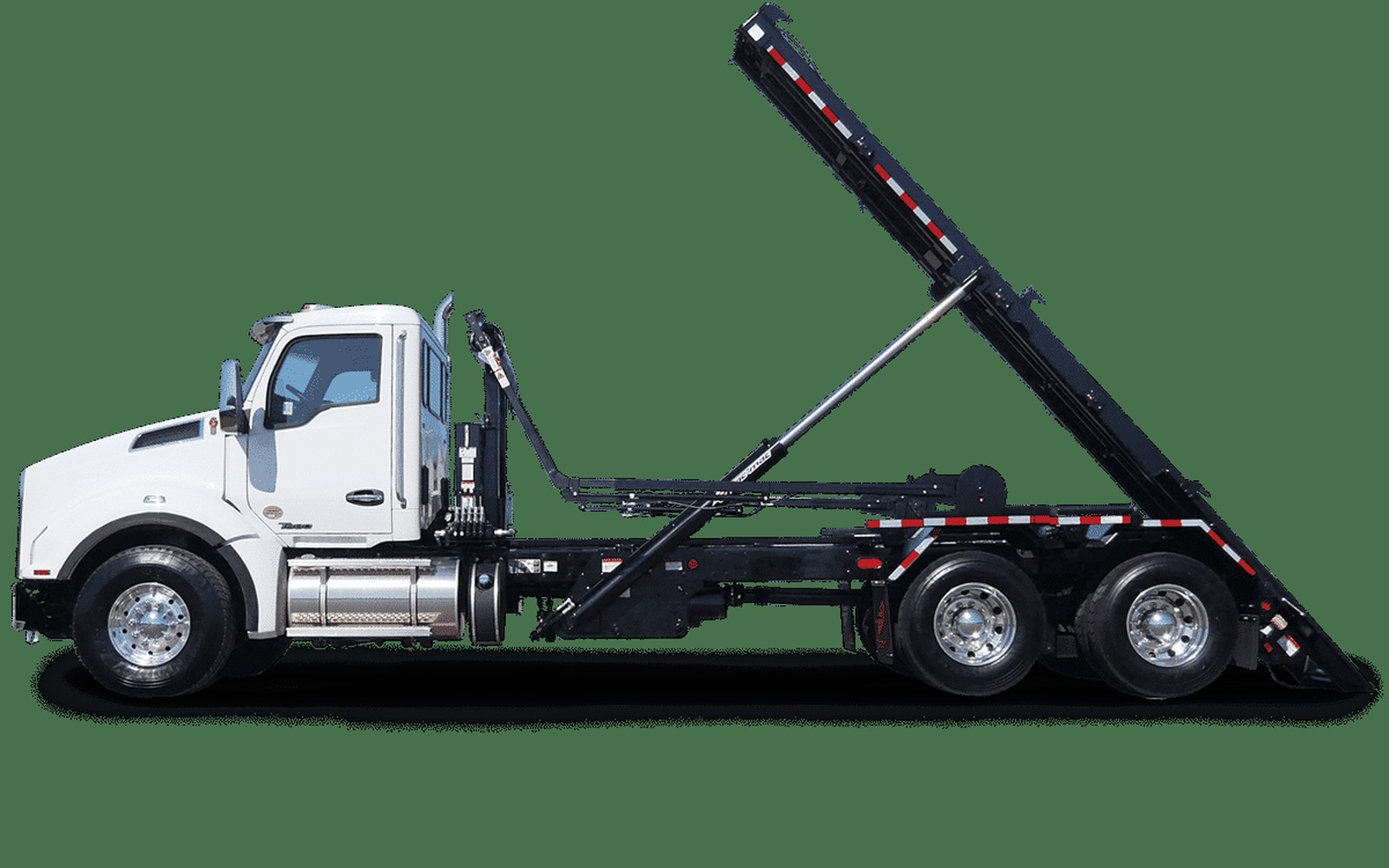
A rear-load garbage truck on a tandem axle chassis is one of the more common first-truck purchases among startup residential haulers. A roll-off truck is equally common for operators entering the roll-off dumpster rental market, because the startup capital needed for containers can be bundled into the same financing transaction as the truck.
Getting a Startup Approval in Practice
A startup application moves through underwriting differently than an established-business deal. The file needs to be built intentionally. We typically ask for: personal credit application with Social Security number, a copy of the business formation documents (Articles of Organization or Incorporation), the business bank account information showing any existing deposits, any signed customer contracts or letters of intent, and the personal tax returns for the owner for one to two years. Some programs work on a reduced-doc basis for startups with strong personal credit.
The lender will pull personal credit and review the business formation documents. Approval may come with conditions: a specific minimum down payment, a personal guaranty (standard for any owner with more than 20 percent ownership), or a requirement that equipment insurance be in place at delivery. We walk through each condition with you before you commit to the transaction.
Timeline from complete application to funding is typically one to two weeks, similar to established-business deals. The front end of the process may take longer because assembling the startup documentation takes effort, but once the file is complete, approvals move at the same pace.
Route Questions