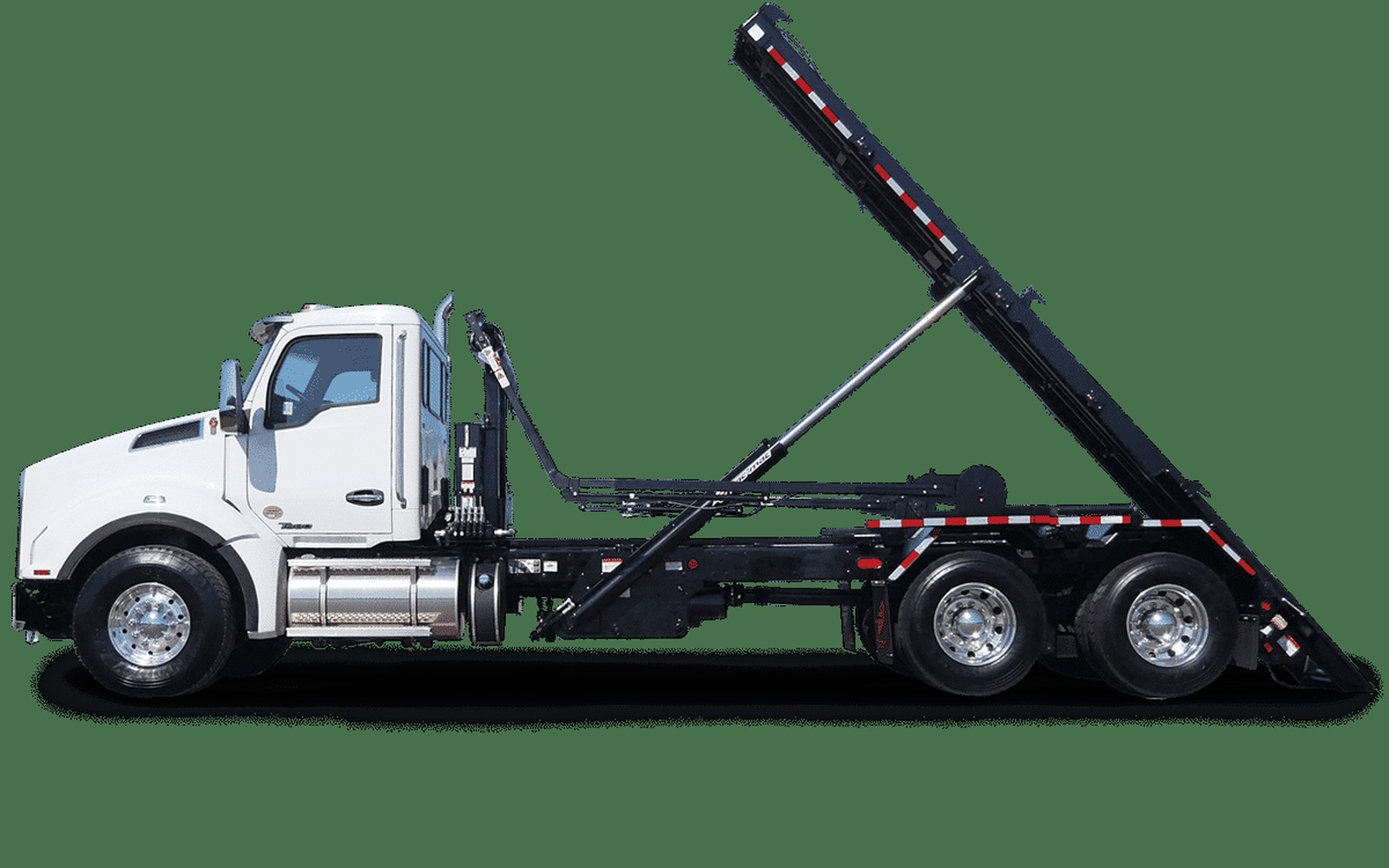
Containers earn money only when they are at a job site. A roll-off dumpster that sits in the yard because the truck broke down or because you ran out of containers to place is money sitting idle. The business model for roll-off rental is simple: place more containers, turn them faster, and keep the truck moving between drop-off and pickup. The constraint is almost always fleet capacity, and fleet capacity is a capital problem.
We finance roll-off trucks and hoists for dumpster rental companies at every stage of growth. A single-truck operator adding their first second unit. A regional company expanding container count to support a construction boom. An established roll-off business replacing older trucks with new cable or chain-hoist configurations that handle today's container weights more efficiently. The asset is well-understood and equipment finance sources have a clear picture of how roll-off rental operations generate cash flow.
Transactions start at $50,000. A single roll-off truck with hoist falls squarely in the range most operators need to finance. Container bundles add to the transaction value and can be included in the same financing package. For deals under approximately $400,000, application-only financing is available, meaning a credit application and three months of bank statements are typically enough to get through underwriting. Funding in about one to two weeks.
Trucks, Hoists, and Containers
The capital stack for a roll-off dumpster rental business has three layers. The chassis, the hoist system, and the containers. Each is a separate asset that depreciates on its own schedule and has its own market for new and used equipment.
The chassis is the foundation. Most roll-off trucks run on Class 8 frames with tandem or tri-axle configurations for legal gross vehicle weight compliance. Peterbilt, Kenworth, Mack, and Freightliner are common chassis choices. The hoist system mounts to the frame and performs the cable or chain lift. Roll-off hoists from Galbreath, Amrep, Palfinger, and Cable-Hoist manufacturers carry meaningful price differences in new condition, and used hoists vary widely in remaining life depending on how many pulls they have done.
Containers are the volume part of the investment. A roll-off rental business needs enough steel in the field to stay busy. A ten-container fleet on a single truck creates obvious capacity ceilings. Operators who want to grow need to add containers alongside truck capacity or they run the risk of the truck sitting because the containers are all placed. Standard sizes run from 10-yard through 40-yard, with 20-yard and 30-yard being the most common for construction and cleanout work. We can include container bundles in the same transaction as the truck financing, or structure a separate container-only facility for operators who already have truck capacity but need more steel.
The Range of Roll-Off Operators We Work With
Roll-off dumpster rental operators come in two general categories, those serving construction and demolition accounts and those serving residential cleanout and landscaping customers. Both use the same equipment, but the job mix, the container size distribution, and the contract structure look different.
Construction and demolition accounts tend to run on longer placements, measured in weeks rather than days, and use larger containers. A 30-yard or 40-yard box on a demo site might sit for three weeks before it needs a pull. C and D debris haulers need to understand payload limits, recycling diversion requirements, and permitted disposal routes. We serve construction and demolition debris haulers as a distinct segment, and many operators straddle both the residential cleanout and C and D markets.
Residential cleanout customers are more transactional. A homeowner renting a 10-yard or 15-yard box for a weekend renovation is a short-turn account. Volume operators in this segment focus on drop-off and pickup speed, container availability, and same-day delivery capability. The economics favor high container count and tight geography to minimize truck miles per revenue dollar.
- Single-truck owner-operators adding a second roll-off
- Multi-truck operators expanding container inventory
- Construction-site focused operators buying tri-axle configurations
- Operators switching from cable-hoist to hooklift for flexibility
- Established businesses refinancing older truck notes at better terms
How Roll-Off Financing Is Structured
Roll-off truck financing typically runs on 48 to 72 month terms for new equipment and 36 to 60 months for quality used units. Containers can often be financed alongside the truck on a blended term, or separately as a shorter-term asset-backed facility. The combined approach is simpler administratively and usually covers everything needed to grow the operation in one transaction.
A roll-off truck financing structure can take several forms. A straight loan puts the operator on title from day one and builds equity through monthly payments. A lease structure, including a dollar-buyout lease or a TRAC arrangement, offers different end-of-term flexibility. For operators who want to keep their options open on whether to keep or trade the truck at the end of the term, a lease with residual may make more sense than a full-payout loan.
Sale-leaseback is available for roll-off operators who have paid-off trucks in their fleet. Converting that truck equity into cash while continuing to use the truck in service is a practical way to fund container inventory expansion or a down payment on an additional unit without taking on fresh acquisition debt on the older truck.
Many operators pair this with Front-Load Dumpster Truck, and Sewer Vacuum Truck.
Add Trucks and Containers to Your Roll-Off Fleet
The more containers you can place, the more the business earns. The financing should not be the bottleneck between your current fleet size and the capacity the market will support. Submit an application or reach out to talk through your truck and container needs. We close in about one to two weeks.
Route Questions