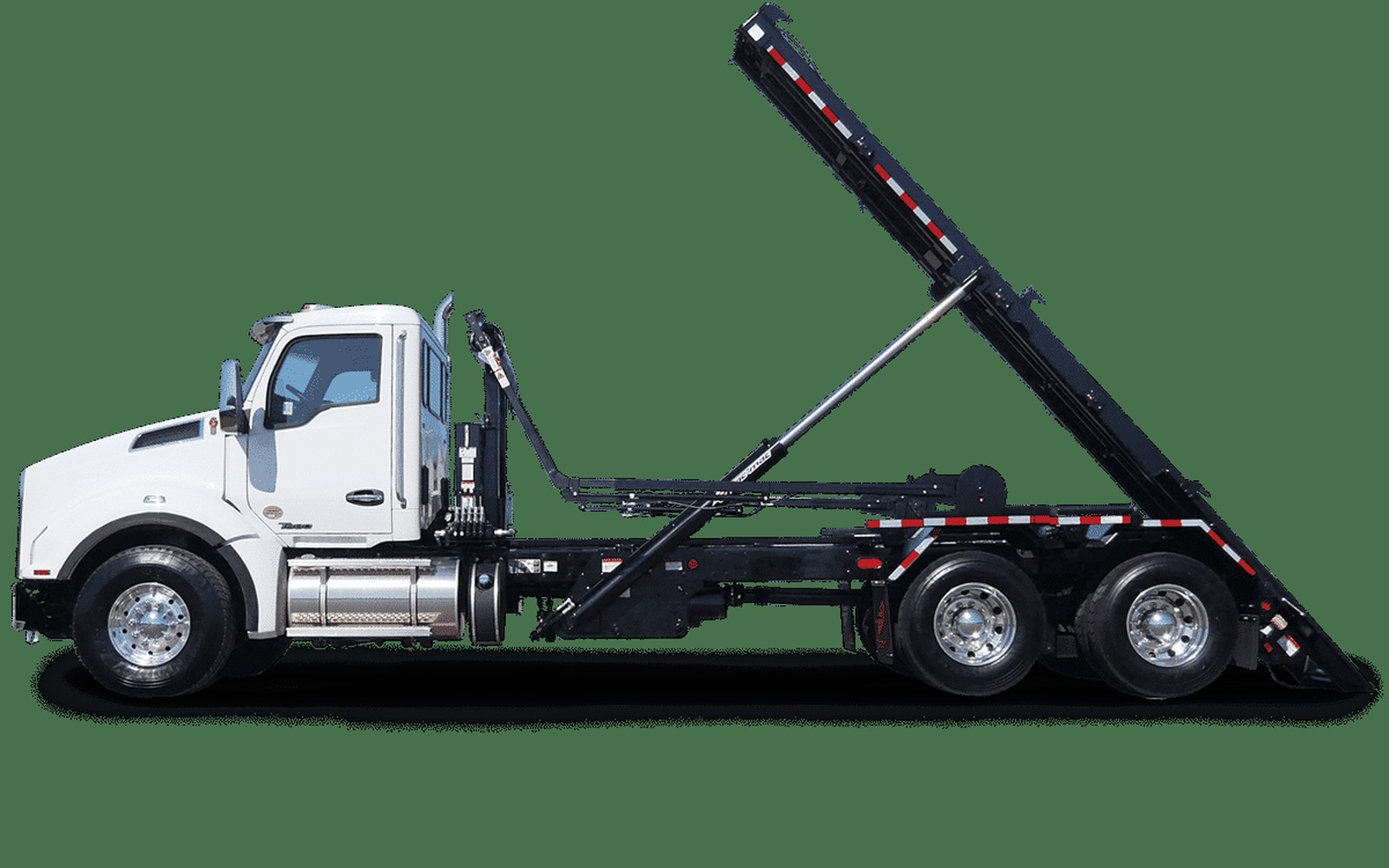
The hoist is the working part of a roll-off operation. Chassis come and go, but a quality hoist on a solid frame is what determines how many pulls a truck gets done in a day and how long it stays out of the shop. Financing a roll-off hoist, whether as part of a new chassis package or as a separate body installation on an existing frame, is a transaction we see regularly and handle efficiently.
Hoist-only financing applies when an operator has a serviceable chassis and needs to replace or upgrade the hoist mechanism, or when a dealer is selling the body and chassis as separately invoiced items. It also comes up when a second-hand chassis is purchased from one source and the hoist body comes from a separate upfitter or salvage sale. We can structure financing that covers the hoist component on its own or as part of the completed unit.
Deals start at $50,000. The hoist alone on a standard cable-pull unit often runs $40,000 to $80,000 depending on capacity rating and manufacturer. Full hoist-plus-chassis packages for new units typically run $180,000 to $300,000. Used hoist configurations with a serviceable body and frame sell in the $70,000-$140,000 range. All of these fall within our standard program. B and C credit borrowers are considered, and application-only approval runs to approximately $400,000.
Hoist Types and What They Handle
Roll-off hoist mechanisms fall into two primary categories: cable-hoist (also called cable-pull or end-dump) and hooklift. A cable-hoist uses a cable drum and a telescoping rail system to pull containers onto the truck bed and tilt for dropoff. A hooklift uses a hydraulic arm that picks containers via a front-mounted hook bar rather than a cable, allowing faster cycle time and compatibility with multiple body types.
Within the cable-hoist category, capacity ratings matter for commercial and C&D debris applications. Hoist manufacturers including Galbreath, Ampliroll, and Stellar produce cable-hoist units rated for different container weight classes. The Galbreath U5-OR series, for example, covers standard residential and light commercial applications, while the heavier outboard-rail configurations handle demolition container weights in the 10-ton-plus range. Buyers replacing a worn hoist need to match the capacity class to the accounts they service.
Hooklift units from brands such as Hiab, Palfinger, and Switch-N-Go offer different reach and lift ratings. For operators running multiple body types, the hooklift's versatility is a real operational advantage. A single chassis equipped with a hooklift can switch between a roll-off container, a flatbed, a dump body, or a water tank depending on the day's work. The financing for a hooklift-equipped truck reflects the multi-use collateral value, which often supports the deal structure.
Operators looking at a roll-off truck as a complete package should compare the hoist spec alongside the chassis. A heavy-duty hoist on a light chassis is a mismatch that limits the truck's useful life, and a light hoist on a heavy chassis leaves capacity on the table. Matching hoist and chassis spec to the intended container size and debris type produces the best operating economics and the strongest collateral story.
Structuring the Hoist Deal
A hoist-only purchase on a chassis already owned by the borrower is an equipment loan against the completed combination. The lender's security interest covers the hoist body, and sometimes the chassis as additional collateral depending on the deal structure. For operators with clear title to the chassis, this path is typically straightforward.
When the hoist and chassis are purchased together as a single unit (the most common scenario), the financing covers the completed truck by VIN. The key is that the unit must be operable and titled as a complete vehicle before funding. If the hoist is being installed by an upfitter, funding typically occurs after installation is confirmed.
Operators who want to use their existing fleet equity to help fund a new hoist installation can explore a garbage truck refinance or Sale-Leaseback on another unit in the fleet. Extracting equity from an asset that is mostly paid down is a common way to self-fund the down payment or installation costs on a new hoist configuration without a separate personal loan.
Tax treatment for hoist and truck purchases often benefits from a Section 179 deduction in the year of purchase. For a $150,000 hoist-plus-chassis package, the potential deduction can meaningfully offset the net cost in the current tax year. Check with your accountant to confirm the applicable limit for your business structure.
Who Finances Roll-Off Hoists With Us
The primary applicant group is established roll-off operators running two to ten trucks who need to replace a failing hoist or add capacity to the yard. A hoist that is frequently down for hydraulic repairs or cable failures is a liability that costs more in missed pulls than a new payment would. Operators usually know this math by the third repair in a season.
A second group is operators converting a chassis they already own into a roll-off unit. This happens when a hauler acquires a used truck from another market, buys a repossessed chassis at auction, or inherits a unit from a retiring operator. Installing a production-ready hoist on an existing chassis is often faster than sourcing a complete used roll-off truck, and the costs can be financed separately from the chassis.
New-entry roll-off operators, particularly those who have won a first commercial account and need to field a truck before service starts, also represent a significant portion of our hoist financing volume. We work through new-business startup financing for those operators when the personal credit is solid and the account documentation is in hand. Roll-off dumpster rental companies starting out in their local market are a natural fit for this path. Operators serving construction and demolition debris haulers markets are among the most common hoist buyers because C&D debris remains the largest roll-off revenue category.
Get the Hoist Financed
Share the hoist spec, the chassis situation, and your credit picture. We structure the deal to fit what you are actually buying and get funding moving so the truck is operational before your next scheduled pull.
Route Questions