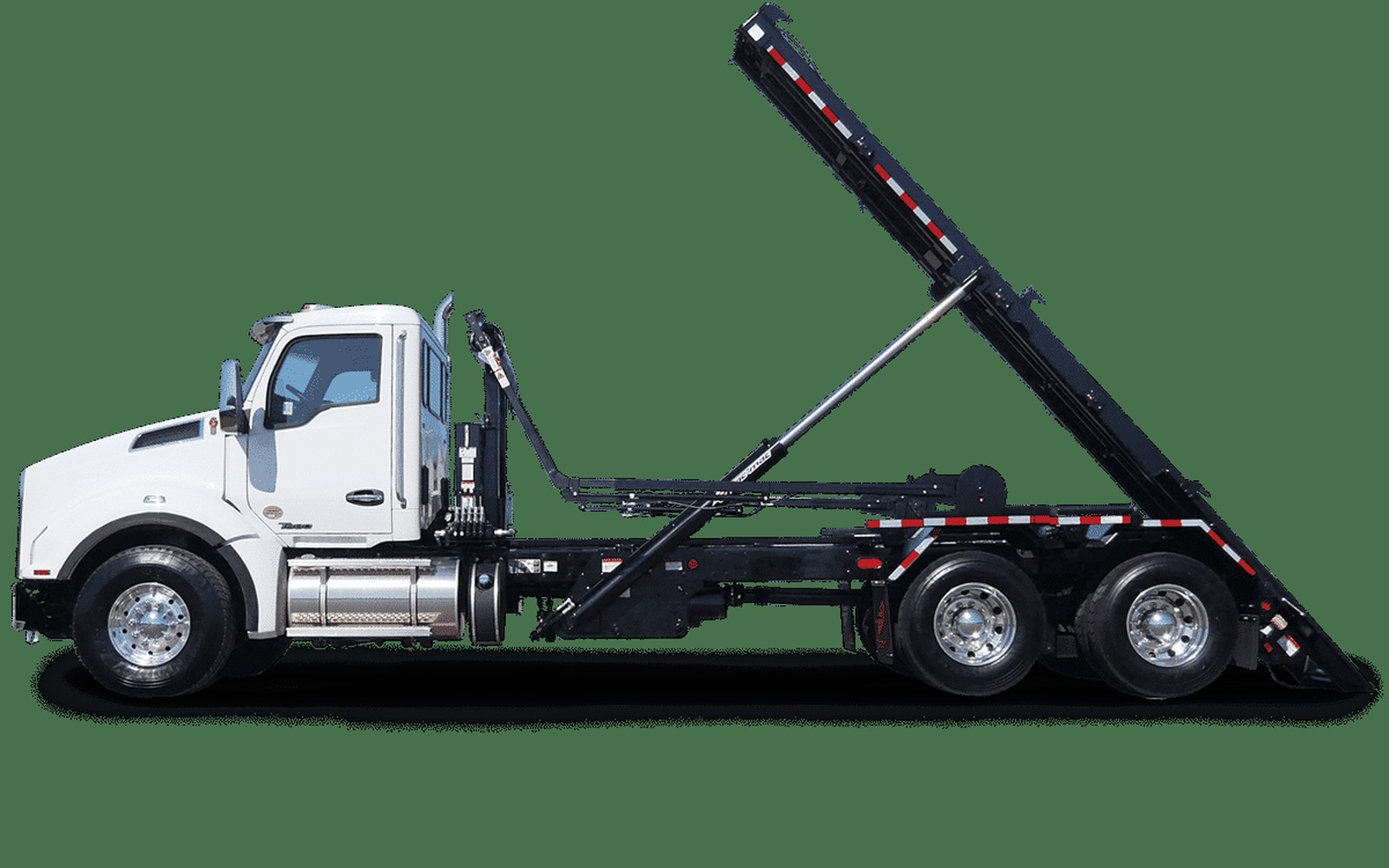
Cable-hoist roll-off trucks have been loading and pulling containers since long before the hooklift configuration became common, and a significant share of the market still runs them. The cable system pulls a container up the tilted truck bed using a steel cable on a powered winch drum, then sets it down the same way in reverse. That simplicity is the appeal: fewer moving parts than a hooklift, lower initial cost, and proven reliability in heavy-duty service. For operators running debris hauling, dumpster rental, or C&D container service, a cable-hoist unit remains a practical and financeable piece of equipment.
Pricing for cable-hoist roll-off trucks varies considerably by chassis age, hoist manufacturer, and whether the truck comes with containers. Used cable-hoist units in decent working condition trade at a discount to comparable hooklifts, and that price gap makes them attractive to operators building their first fleet or adding capacity without the capital outlay of a new unit. We finance cable-hoist roll-offs on the same programs as other roll-off equipment, including the option to include roll-off containers in the transaction.
Cable-Hoist Systems: How They Work and What Lenders Need to Know
The cable-hoist mechanism is mechanically straightforward. A hydraulically powered winch pulls a steel cable attached to a chain bar or hook at the front of the container. As the winch winds the cable, the container is dragged up the tilted truck bed until it is fully seated and locked for transport. The process reverses for delivery: the bed tilts, the cable pays out under controlled tension, and the container slides to the ground.
The key maintenance points are the winch drum and cable, the tilt cylinder and hinge assembly, and the cable attachment points on the containers. Cable wear is predictable and inspectable. An experienced operator knows to check cable condition regularly and replace it on a defined schedule, which makes maintenance costs more predictable than some other hoist types. Lenders familiar with refuse equipment understand this maintenance profile and do not penalize cable-hoist trucks relative to hooklifts on residual value assessments.
Containers used with cable-hoist trucks have a specific design: the front must have a hook attachment point or chain bar compatible with the cable system, and the skids underneath must be able to take the load of being dragged up the bed. Most standard open-top roll-off containers are compatible with both cable-hoist and hooklift configurations, which provides flexibility if you add a hooklift roll-off truck to your fleet later. We can finance the truck and containers together or separately.
- Winch drum capacity and cable rating determine maximum container weight the hoist can safely pull
- Tilt angle for loading and unloading typically runs 45 to 50 degrees on most cable-hoist subframes
- Cable replacement intervals vary by usage intensity but most operators replace on a one to two year cycle under heavy use
- Standard container sizes run 10, 15, 20, 30, and 40 cubic yards, all compatible with cable-hoist trucks using the appropriate front attachment
Who Runs Cable-Hoist Roll-Offs
Construction and demolition debris haulers are the core market. Construction debris hauling generates consistent demand for roll-off services because job sites produce material that cannot go in a standard garbage can, and the volume requires a container rather than a dump truck. Cable-hoist trucks handle this work effectively, and the lower entry cost makes them accessible to operators who are building route density in their first year or two of business.
Dumpster rental companies also run cable-hoist units extensively. Roll-off dumpster rental operations depend on fast, reliable swaps, and the cable-hoist system's mechanical simplicity means fewer service calls and more productive days in the field. For a rental operation focused on cost control and uptime, the cable-hoist configuration often makes more sense than a hooklift at similar transaction sizes.
Junk removal businesses that have outgrown pickup trucks and want to move into container rental sometimes buy a cable-hoist roll-off as their first serious piece of equipment. The price point on a used cable-hoist unit is often more accessible than a new hooklift, and the operational profile is similar enough that the transition is manageable. We finance these operators alongside established haulers because the equipment serves the same underlying function: container delivery, collection, and transport to a disposal facility.
Price Range and Financing Terms
Used cable-hoist roll-off trucks in serviceable condition typically run $40,000 to $120,000 depending on chassis age, hoist condition, and market availability in your region. Trucks at the lower end of that range are usually older chassis with documented maintenance needs. Trucks at the upper end are cleaner late-model units with more useful life remaining. New cable-hoist configurations on a current-model chassis are less common because most buyers choosing new go with hooklifts, but they do appear from specialty upfitters.
Loan terms on used cable-hoist trucks generally run three to five years. Shorter terms reflect the asset age rather than a judgment about the truck's utility. For a cleaner late-model unit, five years is often achievable. Down payment requirements depend on credit profile and the lender's assessment of the unit. Operators with solid credit and verifiable route revenue can sometimes close with minimal down, while B/C credit files typically involve 15 to 25 percent down. B/C credit truck financing for roll-off equipment is available; the terms are less favorable than A-paper but the deal gets done.
If you are financing containers alongside the truck, some lenders treat them as a bundle and others want separate agreements for the rolling stock versus the containers. We structure whichever approach fits the lender and the collateral cleanly. The roll-off truck financing program covers the full picture.
What Qualifies for Cable-Hoist Roll-Off Financing
The basics are a minimum transaction of $50,000, a complete credit application, and verifiable information about the truck. For used units, we want to know the chassis year, make, and mileage, plus the hoist manufacturer and any known condition issues. A dealer invoice or private-sale purchase agreement is required. Insurance is required before funding, and we specify the lender as loss payee and additional insured on the certificate.
Credit history matters but credit perfection is not required. We have financed operators with prior delinquencies, recent bankruptcies that have been discharged, thin credit files from operating primarily on a cash basis, and businesses with uneven revenue histories. What we need is a realistic picture of the current situation, enough information to match the file to the right lender, and honesty about challenges so we do not waste time on lenders who will decline the specific profile.
Business vintage matters less than revenue visibility. An operator who has been in business six months with a verifiable contract has a stronger file than a three-year-old business that cannot demonstrate route revenue. Time in business is a factor but it is one of several, and we evaluate the whole picture.
Get Financing for Your Cable-Hoist Roll-Off
Submit a one-page application and we will come back with structure options within one business day. Include the year, make, and hoist information on the specific unit you have in mind and we can move faster. Minimum $50,000. New and used equipment both qualify. B/C credit accepted. Call or apply online.
Route Questions