Nashville's waste hauling market has been under pressure for over a decade, and not the kind of pressure that eases when the economy softens. The metro population crossed two million and the construction activity has not let up. Every new hotel on Broadway, every apartment tower in the Gulch or East Nashville, every distribution warehouse out along I-40 toward Lebanon generates waste that somebody has to haul. The operators who were capitalized to grow with the market captured accounts that are now worth protecting. The ones who could not add trucks fast enough gave ground to competitors who could.
We finance refuse trucks and roll-off equipment for Nashville-area operators across Davidson, Williamson, Rutherford, and Sumner counties. The process is fast, the documentation requirements are realistic, and we know that route contracts do not pause for financing timelines that stretch to two months.
Nashville's Waste Generation: Music City Beyond the Strip
The entertainment economy along Lower Broadway and the honky-tonk corridors generates significant restaurant and bar waste that feeds commercial front-loader routes with predictable daily volume. The hospitality sector more broadly, including the hotel boom that has added thousands of keys to the Nashville metro over the past five years, creates steady commercial waste demand. Operators holding those contracts run commercial front loaders on tight service windows because the properties demand it.
Construction debris hauling has been one of the defining growth segments for roll-off operators in Nashville. The apartment and mixed-use development in the urban core, along with the suburban residential growth in Williamson County communities like Franklin, Brentwood, and Spring Hill, generates C&D debris at a pace that keeps roll-off trucks deployed consistently. Spring Hill in particular has been one of the fastest-growing cities in Tennessee, driven by the GM battery plant and related supplier activity that is generating both residential and industrial-adjacent waste streams.
Healthcare is also a major Nashville industry. HCA Healthcare is headquartered in Nashville, and the region's hospital and outpatient infrastructure generates both regulated and non-regulated waste. Medical waste haulers serving Nashville's healthcare corridor operate under compliance requirements that make reliable equipment even more critical than in the municipal solid waste sector.
Equipment We Finance for Nashville Routes
Front-loaders, rear-loaders, and automated side loaders make up the core of residential and commercial route fleets in the Nashville metro. Automated side loaders are the standard tool for new residential developments in Williamson County and Rutherford County, where the street layouts accommodate them and the subdivision density makes per-stop efficiency critical.
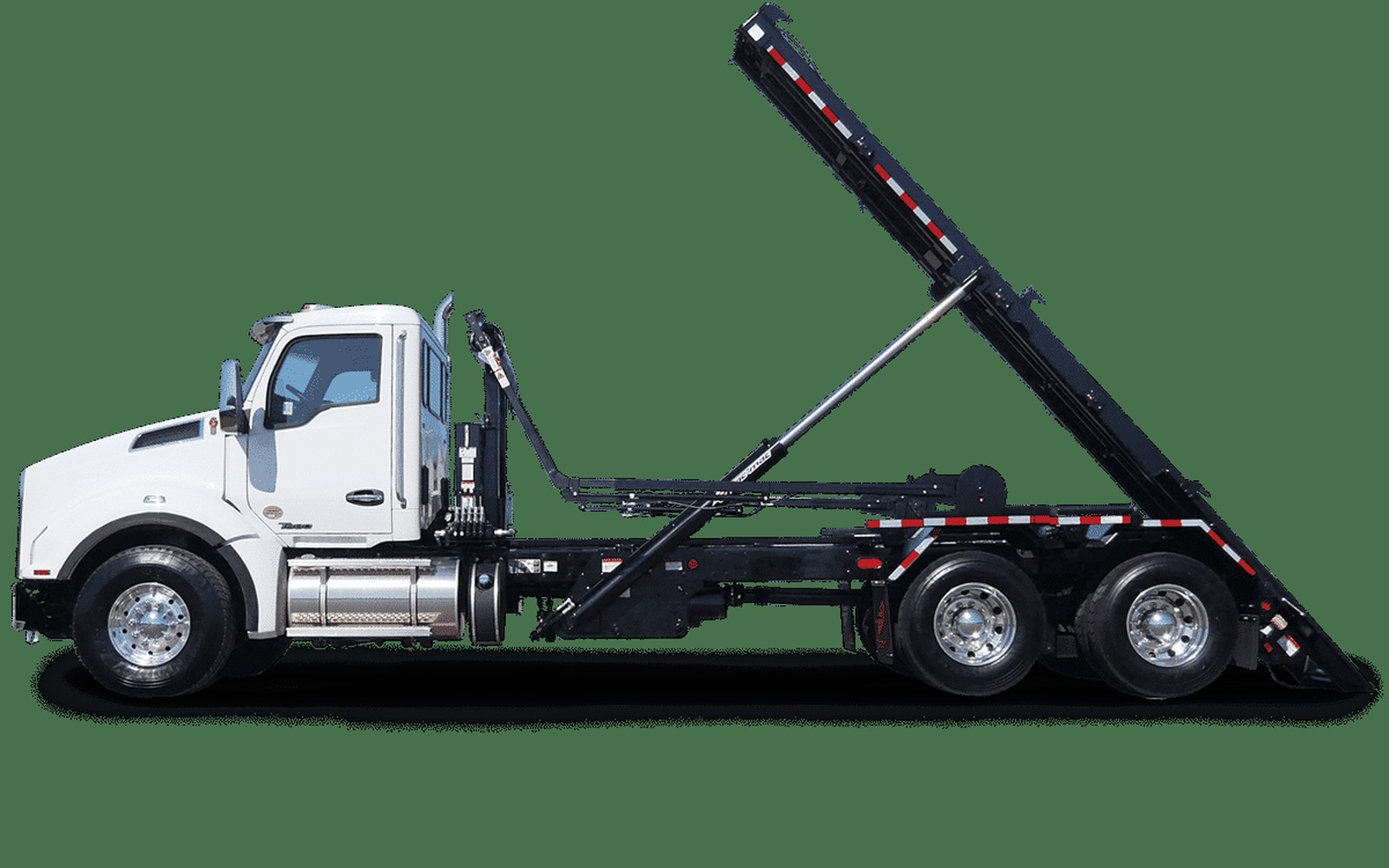
Roll-off equipment is a distinct market within Nashville hauling. Container rental companies servicing construction sites, property managers handling renovation debris, and event venue operators all pull from a roll-off inventory that needs to turn over fast. Operators who have sufficient container inventory to satisfy concurrent site demands without running customers short are the ones who get the call-backs and the referrals.
We finance hooklift trucks as well, which are common in Nashville-area operations that need flexibility across waste types. A hooklift gives an operator the ability to swap bodies quickly, serving multiple waste categories with one chassis. That kind of versatility matters in a market where an operator may be running construction debris in the morning and organic waste to a transfer station in the afternoon.
Timeline and Process
Most deals fund in about one to two weeks from a completed application. The biggest driver of timeline variation is how quickly documentation is submitted and whether the equipment being purchased has a straightforward title history. Dealer purchases tend to close faster than private party transactions for that reason.
Documentation at the application stage is minimal: a completed credit application, three months of business bank statements, and the equipment information. For deals up to approximately $400,000, that is typically the full initial request. We do not ask for everything upfront and then come back with additional requests that could have been anticipated; the goal is to move efficiently from application to decision to funded deal.
B and C credit situations are reviewed. The underwriting looks at the complete picture: banking history, contract quality, revenue trend, and the specific credit history. An operator who has a blemish that is two years old but a clean track record since then is a meaningfully different risk than the raw credit score suggests, and we underwrite accordingly.
Loan, Lease, or Refinance
A refuse truck loan gives Nashville operators straightforward ownership on a fixed monthly payment. For operators who want to maximize depreciation capture, a loan structure combined with Section 179 or bonus depreciation treatment can make the after-tax cost of the truck significantly lower than the purchase price in year one.
A lease structure, particularly a fair market value lease, offers lower monthly payments and end-of-term flexibility. If the truck has depreciated to below the FMV residual, you pay less than market to own it. If you want to upgrade to a newer unit at term end, you walk away without the hassle of selling a used truck. For operators who cycle equipment regularly, this flexibility often matters more than the marginal monthly payment difference.
Get Financing for Your Nashville Route
Nashville routes are competitive and the market is not slowing down. Submit an application and we will work it quickly. Funding in about one to two weeks from a complete file.
Route Questions