The contract is what matters in the DC metro, and contracts here range from multi-year commercial agreements with property management firms holding dense apartment inventories to government facility collection arrangements that pay on a schedule as predictable as any in the country. Private operators in this market do not lack for contract opportunity. The volume of office buildings, multifamily residential properties, restaurants, hotels, and federal facilities packed into a relatively compact geography generates collection density that is exceptional by any standard.
We finance refuse trucks and collection equipment for DC metro operators across the District, Northern Virginia, and the Maryland suburbs. New equipment, used packers and roll-off rigs, refinancing on existing truck debt, and sale-leasebacks on clear-titled machines. Minimum $50,000, typical deals at $100,000 to $150,000 per unit, and we handle fleet-level financing above that. B and C credit considered. Application-only financing available to about $400,000 on three months of bank statements. Funding in one to two weeks from a complete application.
The DC Metro Waste Collection Market
The DC metro market is one of the most economically stable in the country, driven by federal employment, government contractor operations, and the dense mixed-use development that has filled in Tysons, Silver Spring, Bethesda, Rockville, and Arlington over the past two decades. This stability translates directly into waste collection stability: office buildings, apartment complexes, and government facilities sign multi-year service contracts, and those contracts anchor the revenue streams that private haulers depend on.
The District proper has its own DPW collection operation for residential and some commercial accounts, but private operators hold a large share of commercial collection in the city's restaurant, hotel, and event venue dense areas. The Penn Quarter, Adams Morgan, U Street corridor, and the Navy Yard mixed-use development all generate significant commercial collection demand. Operators running those commercial routes need equipment that is reliable enough to handle daily collection cycles on tight urban schedules.
Northern Virginia adds a different collection dimension. Fairfax County, Arlington County, and Prince William County have all grown significantly, and the commercial development at Tysons Corner, Reston Town Center, and the Amazon HQ2 area in Crystal City and Pentagon City represents a massive commercial waste generator that private operators serve under multi-year property management contracts. Property management waste services firms holding large apartment portfolio contracts in Northern Virginia are among the most stable collection accounts in any market.
Maryland suburbs including Montgomery County, Prince George's County, and Frederick County round out the metro with suburban residential and commercial routes where private operators compete for county and municipal contracts. The growth in Prince George's County, particularly near the Purple Line corridor, is creating new collection demand that established operators are positioned to capture.
DC Metro Operators We Serve
The range of operators in this market is wide. At one end, large private haulers holding multi-county commercial and residential accounts need fleet-level financing to add capacity as they win new bids. At the other, owner-operators serving a few commercial accounts in the District or Northern Virginia need financing for their first or second truck without the overhead of a complex multi-lender process.
We work across that range. Commercial waste collection operators running routes in DC's dense commercial neighborhoods, residential trash collection companies holding suburban county contracts, and roll-off operators serving the construction activity that tracks the region's endless redevelopment all qualify for the same financing structures.
Government-adjacent operators, including those with facility collection agreements covering federal buildings, military housing, or DC government properties, carry some of the most durable revenue in the market. Those contracts typically run on annual or multi-year cycles and pay reliably. Lenders who specialize in refuse equipment understand this and respond accordingly when that revenue is part of the application.
Equipment for DC Metro Routes
Urban DC commercial routes call for front-load packers that can navigate narrow alleys and loading bays while handling the volume that dense restaurant and hotel accounts generate. A well-maintained commercial front-load packer making multiple daily cycles on a dense urban route earns its keep, but it has to be reliable. Equipment failures on a commercial contract in this market generate complaints immediately, and missed pickups create real liability.
Residential suburban routes in Fairfax, Montgomery, and Prince William counties increasingly use automated side-loaders on the long residential streets with consistent cart placement. The efficiency improvement over manual collection on those routes is significant, and operators who have made the ASL investment typically do not go back. Financing that investment at the right time, before a contract starts rather than mid-contract, makes the transition operationally clean.
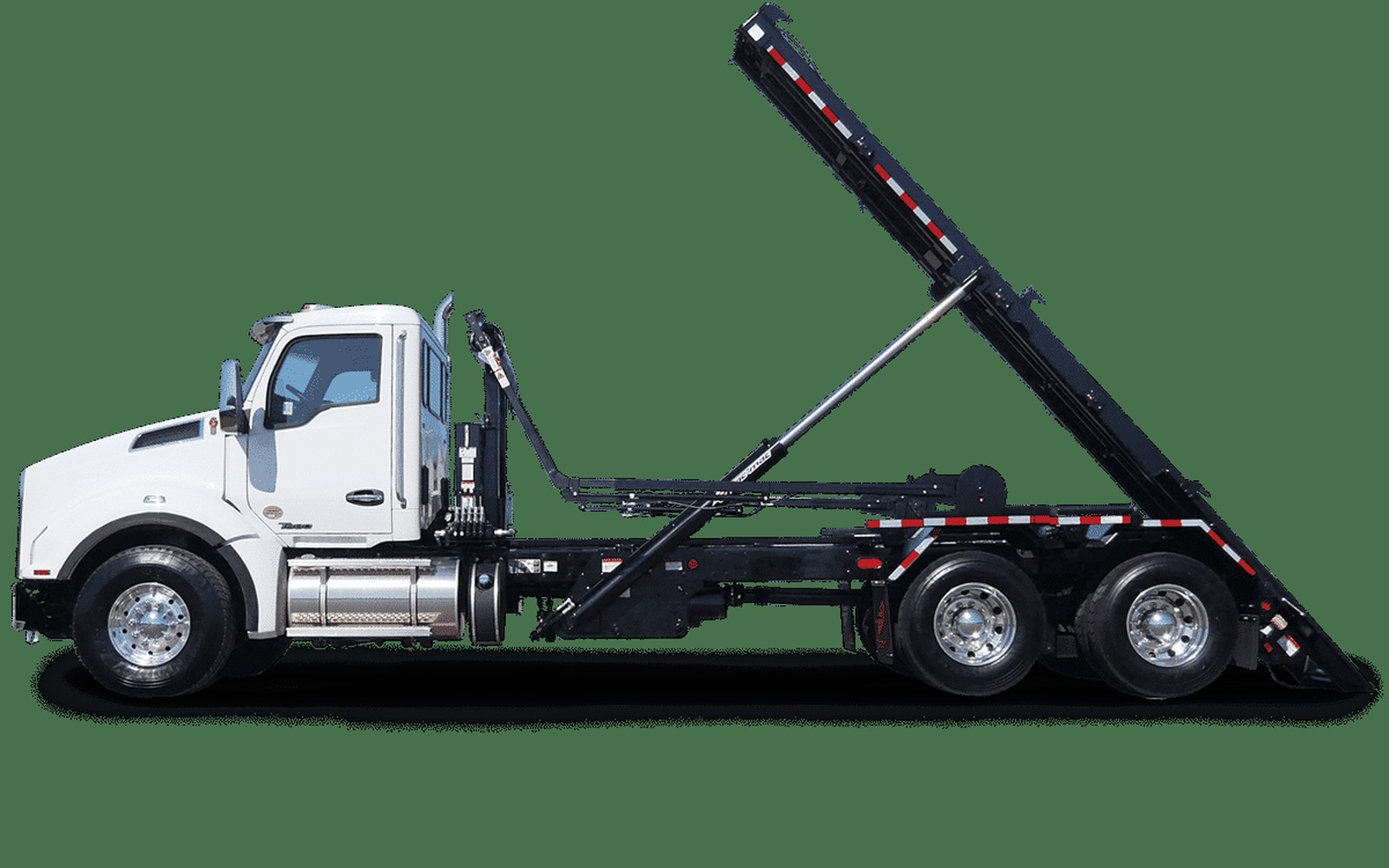
Roll-off demand in the DC metro follows construction, which has been continuous in Tysons, the Navy Yard, NoMa, and along the Purple Line corridor. Roll-off truck operators serving those construction sites need reliable equipment and enough container inventory to hold multiple accounts simultaneously. The roll-off truck financing we structure covers those units at the acquisition cost, and we can sometimes include containers in the same transaction depending on the total deal size.
Route Questions