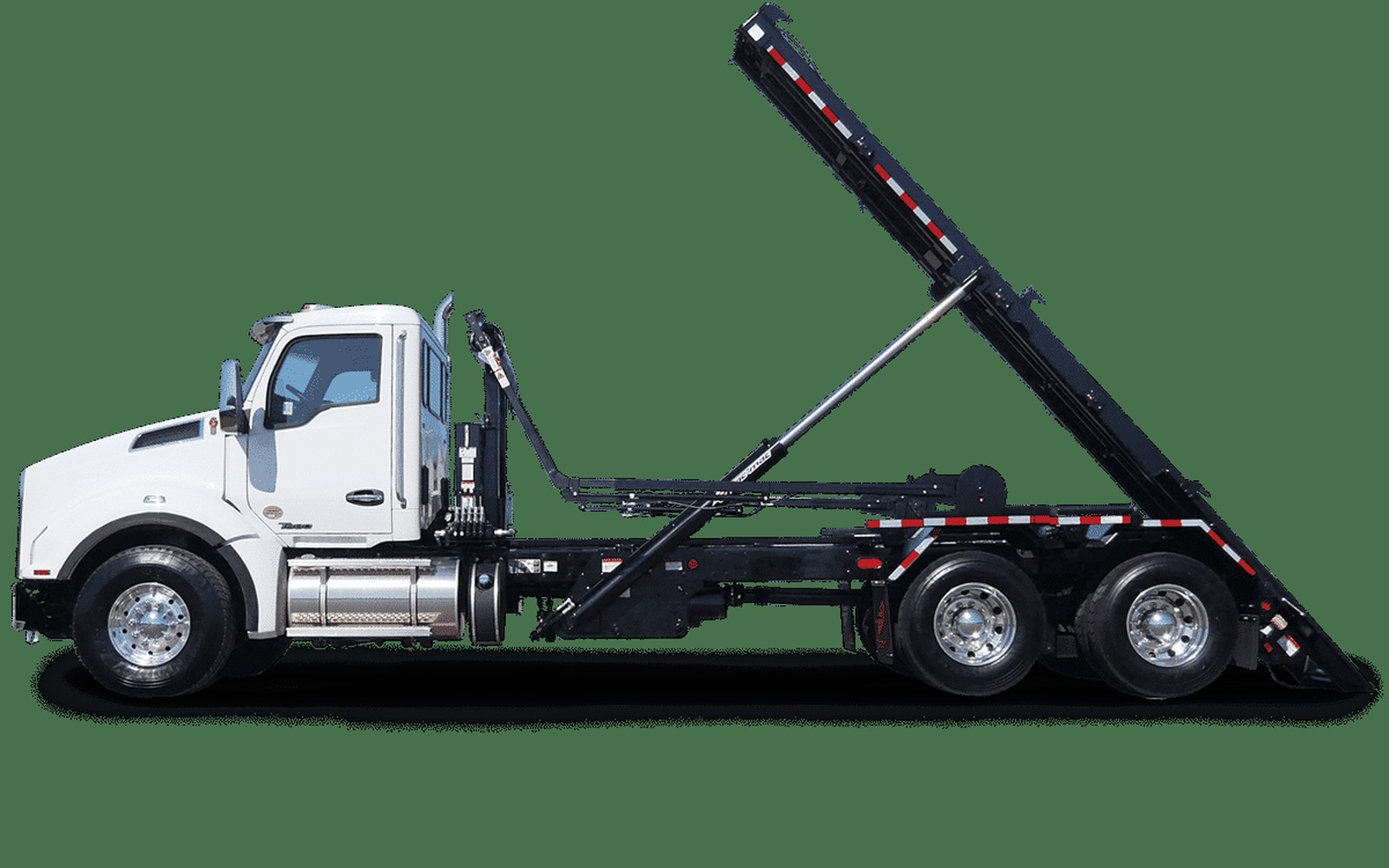
Roll-off operators and transfer-route haulers have been running Kenworth trucks for decades, and the reason is straightforward: the T800 and W900 are built to haul heavy loads cycle after cycle without compromise. In refuse and roll-off service, that means containers loaded with construction debris, compacted waste, or transfer station tonnage getting pulled day after day on routes that grind conventional trucks down faster than operators expect. Kenworth's reputation for drivetrain durability is not marketing; it shows up in the used-truck values that owners see when they eventually sell.
Financing a Kenworth for refuse or roll-off duty is a transaction that reflects the truck's capability. These are not low-cost entry-level units. A Kenworth T880 spec'd for roll-off service with a hoist body can run $200,000 or more depending on the configuration, axle spec, and hoist system. That is a meaningful capital commitment, and getting the financing structure right matters to how the monthly obligation fits the contract revenue the truck generates. We structure Kenworth transactions as purchase loans, TRAC leases, and sale-leaseback arrangements depending on what the operator's cash flow and tax situation call for.
Our sweet spot is the $100,000 to $200,000 transaction, and Kenworth refuse and roll-off builds land comfortably in that range. The minimum is $50,000, and application-only approval is available up to roughly $400,000 for qualified operators. Operators who serve roll-off dumpster rental accounts under commercial construction site contracts are among the most consistent Kenworth buyers in our portfolio.
Kenworth in Refuse and Roll-Off Service
The Kenworth T880 is the workhorse of Kenworth's refuse and roll-off lineup. The T880 is a heavy-duty vocational truck designed for the kind of repeated loading and stop-start cycles that roll-off service demands. It is available with a range of rear axle configurations including tandem and tri-axle roll-off setups, which matters for gross vehicle weight compliance on routes where container weights are at or near legal limits. The T880 spec's well for roll-off truck operations across 20-, 30-, and 40-yard container sizes.
The Kenworth T800 remains in service in many established roll-off fleets as a proven prior-generation platform. While the T880 is the current production focus, used T800 units in solid condition remain viable for operators looking to add capacity without the full cost of a new truck. We finance used Kenworth T800 and T880 units alongside new builds, and the same quality review applies to both.
Kenworth also produces the K270 and K370 cab-over units in medium-duty configurations used in some smaller refuse applications and specialty waste hauling. These are less common in the pure refuse market but come up in operations that mix light refuse with other cargo types. For the heavy roll-off and transfer-route applications that define most of our Kenworth transactions, the T880 is the relevant platform. Both Kenworth and its PACCAR sibling Peterbilt refuse chassis use PACCAR engine families, giving fleet operators who run both brands a degree of drivetrain consistency in the maintenance shop. Operators hauling construction and demolition debris from active job sites are the most consistent buyers of the T880 in roll-off configuration.
- Kenworth T880: primary heavy vocational platform for roll-off and transfer service
- Tandem and tri-axle configurations for heavy container weights
- PACCAR MX engine family for drivetrain commonality with Peterbilt fleets
- Strong secondary market demand for well-maintained Kenworth vocational units
- Used T800 units available for capacity expansion at lower upfront cost
How Kenworth Financing Moves
A roll-off operator who wins a new construction site account needs the truck before the containers start dropping. Waiting three weeks on financing is not a plan; it is a lost contract. We review Kenworth applications and return decisions typically within one to two business days on clean files. From decision to funded, the process runs about one to two weeks. For operators who have a truck sitting at a dealer yard, that timeline means the truck can be on a route within the first billing cycle.
The file we need is straightforward: a completed application, three months of business bank statements, and the truck details (year, model, spec, VIN or serial if available). For larger transactions or B/C credit files, we may ask for business tax returns or financial statements. Application-only approval up to roughly $400,000 covers most single-unit Kenworth roll-off transactions without requiring full financial documentation, which is the fastest path through the process.
Operators who need roll-off truck financing for a truck coming out of a dealer inventory often find the timeline works because the truck is available immediately while the financing closes. We coordinate directly with the dealer on the payoff and title documentation so the operator does not have to manage the transaction logistics. The truck keys change hands when the file closes, not before.
Equity and Refinance Paths on Kenworth Equipment
Kenworth trucks hold secondary market value well, particularly in the vocational and heavy-duty segments where the brand's reputation for durability is understood by buyers. An operator who purchased a Kenworth T880 several years ago and has paid the loan down substantially has equity in the truck that can be accessed. A cash-out refinance on a Kenworth roll-off truck pulls that equity into working capital, which can fund a container purchase, a down payment on a second truck, or operating expenses during a contract ramp-up period.
The sale-leaseback alternative is for operators who own the Kenworth outright and need a larger capital infusion than a refinance typically provides. The leaseback structure purchases the truck at an agreed value and leases it back on structured monthly payments, issuing the purchase proceeds immediately. The truck stays on the route and the operator receives a working capital payment. At lease end, a buyout option returns ownership. Both structures require the truck to be in good operating condition with a clean title or a payoff that can be addressed at closing.
Operators who financed a Kenworth at a higher rate during a period of tighter credit markets can also look at restructuring the obligation. The garbage truck refinance path on a Kenworth works the same as on any heavy-duty refuse unit: we review the current payoff, the truck's current value, and the overall credit file and propose new terms if the numbers support improvement.
Route Questions