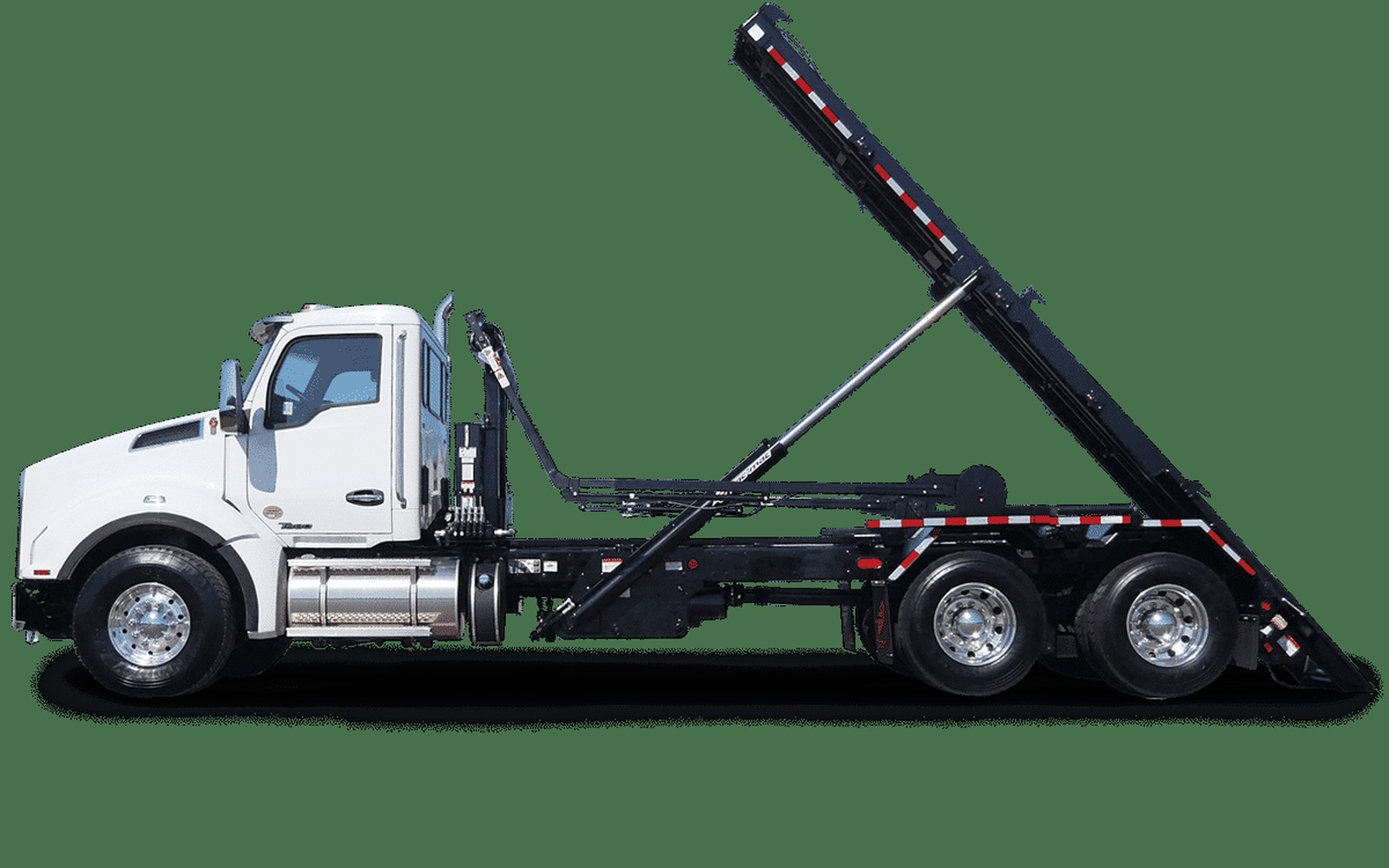
Roll-off truck operators who win large-volume accounts eventually run into the same constraint: one truck with one container is one pull per stop. An operator serving an active construction site with 40-yard boxes coming off every other day needs to move containers efficiently between the yard, the site, and the landfill without the truck making three separate trips. A roll-off trailer solves that by allowing the truck to position multiple containers in a single run, and operators who add trailer capability to their fleet often see a meaningful improvement in pulls-per-shift without adding another truck.
We finance roll-off trailers for dumpster rental operators, construction debris haulers, and solid waste companies that need to move containers more efficiently than a single-truck, single-container operation allows. Whether the trailer will haul a single 40-yard box on a long rural run or position multiple containers at a site being staged for a large demolition project, the deal structure fits the job.
Roll-Off Trailer Configurations and Operational Use
Roll-off trailers are purpose-built to haul loaded or empty roll-off containers using the same cable-hoist or hooklift system used on a roll-off truck, or through a passive trailer design that holds the container during transport and uses the truck's hoist to load and unload. The most common trailer type in the dumpster and debris hauling market is a pintle-hitch or fifth-wheel gooseneck trailer designed to accept standard roll-off containers in 10 to 40-yard sizes.
Tilt-frame trailers are used to position containers using the truck's cable system: the trailer tilts at the rear to allow the container to be pulled off by cable just as it would be pulled off the truck body. This design requires the operator to know their cable system and chain angles, but allows flexible positioning of a container on the trailer without additional specialized equipment at the delivery site.
Rigid deck trailers with a fixed rail system are simpler structurally but require the container to be loaded by the truck's hoist to the trailer height. They are common for empty container transport between the yard and a staging area. Carrying empties on a trailer behind the truck rather than loading them one by one on the truck body dramatically reduces the number of repositioning runs needed in a high-volume yard operation.
Payload capacity for roll-off trailers in the waste market typically runs 22,000 to 40,000 pounds depending on axle configuration and trailer gross weight rating. Operators need to verify that the combined gross vehicle weight of the truck and loaded trailer stays within state and federal legal limits, which vary by state. Some states have special oversize or overweight permits available for construction debris haulers, but compliant loading is the baseline requirement.
Trailer length ranges from 20 to 40 feet depending on the container size being carried. An operator who primarily runs 10 and 20-yard containers can use a shorter, lighter trailer than one running 40-yard boxes, which matters on residential streets with turning-radius constraints.
When Roll-Off Operators Add Trailer Capacity
The decision to add a roll-off trailer typically comes when a particular account or route pattern creates a mismatch between truck trips available and containers needed. Construction and demolition accounts are the classic case. A large demo project may need 4 to 6 containers on site simultaneously, with frequent swaps. A single roll-off truck making individual container runs spends an enormous portion of its day on repositioning rather than on billable pulls. A trailer allows the driver to stage empties and collect fulls in fewer runs, recovering time and increasing billable activity per shift.
Operators who serve construction and demolition debris haulers or who are themselves in the C&D business often find that trailer capacity is the difference between being able to handle large job-site accounts and having to turn them away. A general contractor staging a significant commercial renovation or demolition needs a hauler who can keep up with the debris volume, and an operator with a truck and trailer combination can often promise service levels a single-truck competitor cannot match.
Roll-off trailer financing also makes sense for operators expanding their empty container staging logistics. A yard operation that stores 50 or 100 containers needs a way to move empties efficiently between the yard and customer locations. Using a trailer to batch-deliver empties in the morning and collect fulls in the afternoon reduces truck idle time and improves route efficiency without adding headcount or a second truck.
Operators who run primarily long-distance hauls to regional landfills where the landfill is more than 30 to 40 miles from the service area may find trailer-assisted transport economically attractive. The truck and trailer combination can carry a loaded container to the landfill and bring an empty back in one trip, reducing per-container haul cost significantly on routes where landfill distance is a major cost driver.
Roll-Off Trailer Pricing and Financing Options
New roll-off trailers priced for the waste and C&D market typically run $30,000 to $80,000 depending on axle count, trailer length, hitch configuration, and rail type. Used trailers in good condition range from $10,000 to $45,000. A common transaction is the purchase of 2 to 4 trailers to support an existing roll-off fleet, and those combined deals readily clear our $50,000 minimum with room to spare.
Trailers are often financed in combination with roll-off truck purchases or container fleet purchases, and bundling multiple assets into one deal simplifies the transaction without complicating the structure. We have handled combined deals covering a roll-off truck, a trailer, and a container fleet all in one package. The application-only path is available for combined deals up to approximately $400,000.
For operators comparing roll-off trailers against adding a second roll-off truck to solve the same capacity problem, the capital difference is significant. A new roll-off truck might require $200,000 to $350,000. A trailer at $50,000 to $80,000 solves a specific repositioning and capacity problem at a fraction of that cost. The right answer depends on whether the constraint is truck count or container positioning, and many operators benefit from adding a trailer first to diagnose which constraint they are actually facing.
The roll-off truck financing page covers the truck side of the equation for operators who are evaluating both options simultaneously, and our team can help you think through the economics of each approach for your specific route density and account type.
For a fuller picture, see Refuse Truck Loan, Refuse Truck Lease, Garbage Truck Refinance, and Sale-Leaseback.
Get Your Roll-Off Trailer Financed
More pulls per shift without adding a truck is an easy economic argument. Tell us how many trailers you need and what accounts they will serve, and we will put together a deal that fits your container operation. Apply today and expect a credit decision within days.
Route Questions