Los Angeles sprawls across four thousand square miles, and the waste collection routes that thread through it represent some of the most complex service territory in the country. From dense corridors in central LA to the sprawling residential tracts of the San Fernando Valley to the port-adjacent industrial zones in Carson and Wilmington, the equipment requirements shift block by block. Operators serving this market depend on trucks that hold up across long daily routes, and when one goes down, the contract exposure is immediate.
California's regulatory environment adds a layer that operators in other states don't face. The California Air Resources Board (CARB) has set aggressive timelines for transitioning waste collection fleets to zero-emission or near-zero-emission vehicles. That means many LA-area operators are actively making capital decisions about replacing older diesel units with CNG refuse trucks or evaluating electric refuse trucks as the technology matures. Those are significant capital purchases, and financing them properly is essential to keeping cash available for operations.
We fund refuse truck purchases, refinancing, and sale-leaseback for operators throughout the Los Angeles basin. Minimum transaction is $50,000. Sweet spot is $100,000 to $150,000 and above. Application-only up to roughly $400,000. Funding in one to two weeks.
The LA Waste Market: Equipment That Has to Last
The City of Los Angeles collects residential waste through its own Bureau of Sanitation, which operates an enormous municipal fleet. The private sector serves the commercial, construction and demolition, and unincorporated county areas. For private operators, the LA market divides roughly into three segments: commercial collection in the city and county, construction debris hauling tied to the region's persistent development activity, and recycling collection under California's mandatory diversion requirements.
California's AB 341 mandates commercial recycling, and AB 1826 adds requirements for organics diversion. Operators holding commercial collection contracts in LA County need trucks capable of servicing multiple streams. Dual-stream recycling trucks and split-body configurations serve routes where commingled recyclables and trash move together. For operators building out that service capability, financing the right equipment is the foundation.
The Port of Los Angeles and Port of Long Beach together form the largest container port complex in the United States. The industrial zones surrounding the ports in San Pedro, Wilmington, Carson, and Long Beach generate steady volumes of construction, packaging, and industrial waste. Commercial waste collection businesses serving those corridors need reliable front-loaders and roll-offs moving continuously.
Equipment Types LA Operators Finance Most
Automated side loaders dominate residential routes in LA. The city's own fleet runs primarily ASL equipment, and private operators serving unincorporated county residential areas follow the same approach. A fully equipped automated side loader on a modern chassis runs well into the six-figure range new, and even quality used units from reputable OEMs clear our $50,000 floor. The labor savings on a residential route serviced by ASL versus manual loading are substantial over the life of the contract.
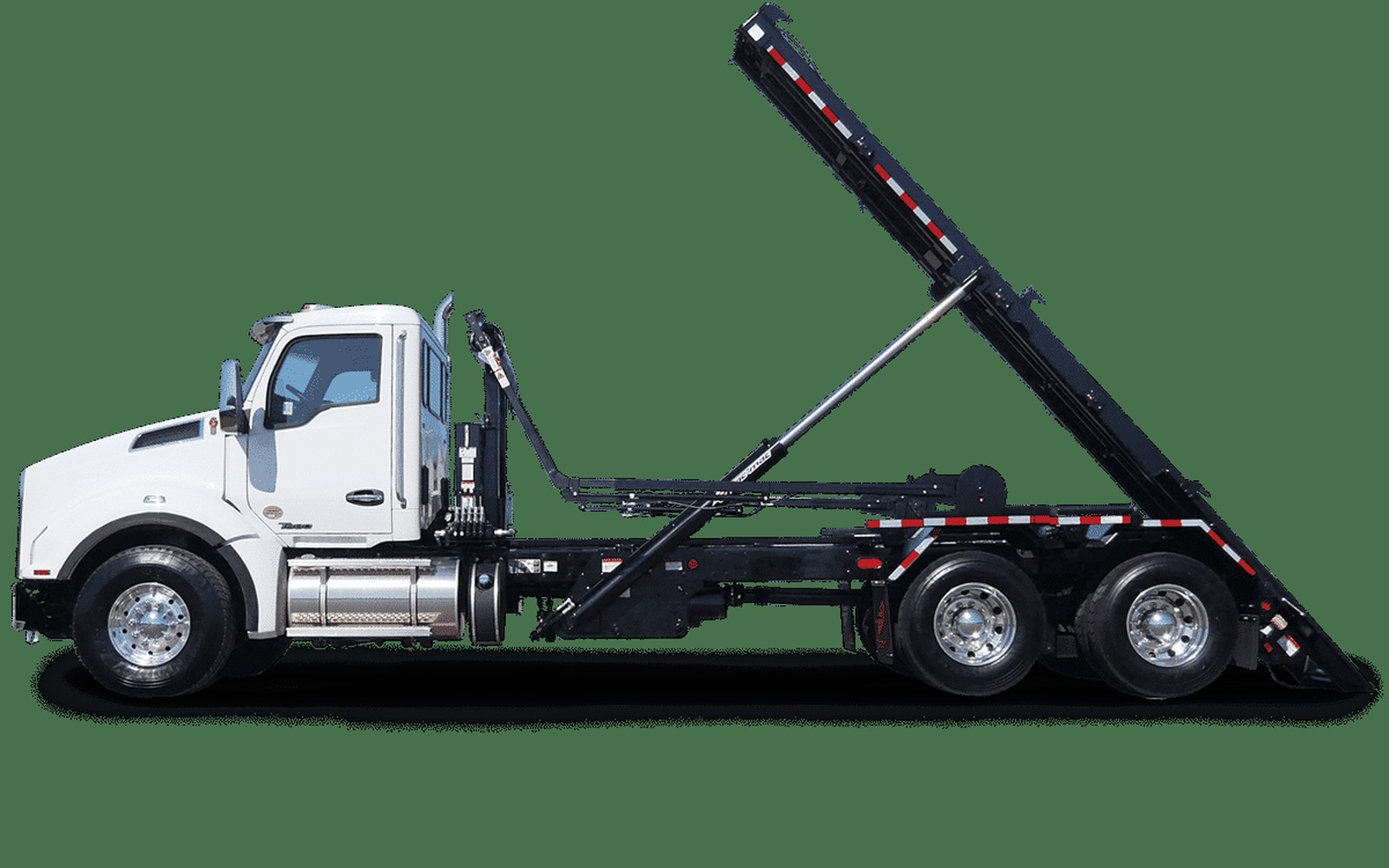
For construction activity, roll-off trucks paired with container inventories are the workhorses. Development in areas like Hollywood, Downtown LA, Playa Vista, and the ongoing densification of the San Fernando Valley keeps roll-off demand elevated. Operators here often need multiple trucks to service container demand during active project cycles.
CNG equipment is increasingly common. The LA area has fueling infrastructure in place, and CARB compliance pushes operators toward cleaner-burning units. We finance CNG trucks at the same terms as diesel, and the higher purchase price typically means the deal size comfortably reaches our sweet spot.
Credit and Documentation
We work with the full range of credit situations that show up in this business. Good credit, marginal credit, even operators who've had a rough year and are building back, all of those can be reviewed. B/C credit truck financing is available, and the underwriting looks at the whole picture: revenue, route stability, bank statement cash flow, and how long the business has been running.
Application-only approval covers deals up to roughly $400,000. That means no tax returns, no full financial statements. Above that, three months of business bank statements rounds out the file. For operators who hold municipal contracts or franchise agreements, sharing documentation of those contracts strengthens the application considerably, since stable contract revenue is exactly what lenders want to see backing an equipment loan.
Structures include a standard refuse truck loan, lease options, and for operators who own free-and-clear equipment, a Sale-Leaseback that converts equipment equity into cash without giving up the truck.
Timeline from Application to Funding
One to two weeks is our standard timeline from completed application to funding. For operators who've identified a truck, negotiated the price, and need to close, that pace keeps the deal from falling apart. We've seen deals stall and trucks go to another buyer because a lender dragged the process out. We don't do that.
The file we need is straightforward: application, relevant business documentation, equipment details, and bank statements if the deal size calls for them. We move through review quickly and communicate clearly about where the deal stands. For LA operators on CARB compliance timelines, speed also matters because replacement deadlines are real.
Route Questions