Portland's hauling environment rewards reliability. Metro area contracts, whether through the city, Multnomah County, or private commercial accounts in the Pearl District and the Lloyd corridor, are managed closely and service failures get noticed fast. Operators holding those routes know the truck has to perform through Oregon's wet winters without skipping a beat. That operational reality means equipment quality and uptime are not optional, and financing that lets you put the right truck on the route matters to how the contract stays held.
We finance refuse trucks for operators working Portland proper, Beaverton, Hillsboro, Gresham, Lake Oswego, and the broader metro. Minimum transaction is $50,000 and the core deal range is $100,000 to $150,000 and above. New equipment and used equipment both qualify, and B and C credit is considered. Funding typically takes one to two weeks from application. We work with operators at every stage, including startups breaking into their first residential route and established fleets looking to expand capacity.
Portland's Waste and Recycling Landscape
Oregon has a long history of environmental leadership in waste management. The state's bottle deposit system (the original Bottle Bill, passed in 1971) reflects a culture of diversion that carries through to how Portland structures its residential and commercial collection programs. Haulers in this market often run separate organics, recyclables, and garbage collection streams, which means the equipment list is more varied than in markets where single-stream is the norm.
Portland's commercial core and the growing mixed-use development along the MAX light rail corridors generate active commercial waste accounts. Commercial waste collection operators serving downtown office buildings, restaurants, and the hospitality sector in the Convention Center and Lloyd District areas hold some of the most stable accounts in the metro. Those accounts also generate the kind of predictable bank statement deposits that lenders want to see in a financing application.
The food and beverage manufacturing sector in the Portland metro, including the significant craft brewing industry concentrated in the city, generates organic and food waste streams that some operators specialize in. Food waste and organics haulers working those accounts need equipment suited to organic material, which sometimes differs from standard garbage packer specs.
Truck Options for the Portland Market
Rear loaders remain central to residential collection in Portland's dense inner neighborhoods where access is tight and manual assistance is sometimes needed. The rear-load garbage truck is the most versatile body for narrow-street residential work and the used market for rear loaders is active enough that operators can find solid units without waiting on a new build.
Automated side loaders have expanded in the outer neighborhoods and in Beaverton, Hillsboro, and the western suburbs where cart-based residential collection is standard. An automated side loader in good mechanical condition dramatically reduces the labor requirement per route, which improves margins on residential contracts significantly.
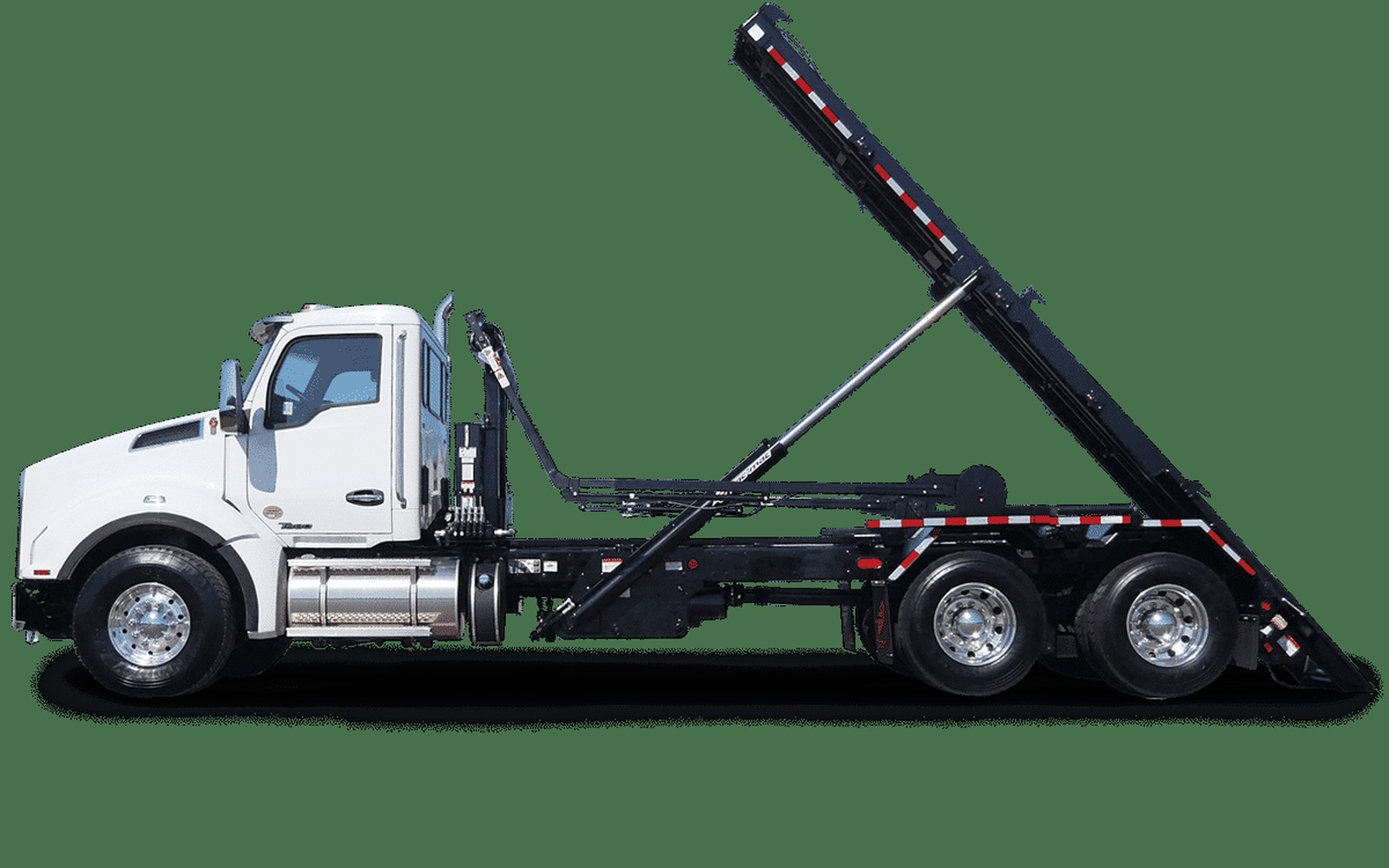
Roll-off service is active in Portland driven by the construction and renovation activity the city has seen over the past decade. Operators with roll-off trucks and container inventory have built consistent revenue streams on construction debris, demo material, and self-haul alternatives for property owners. The roll-off market here is competitive but the demand is durable.
What Qualifies for Financing
Eligible equipment includes new and used refuse trucks, recycling vehicles, roll-off trucks and hoists, and related collection bodies on qualified chassis. The collateral is the truck itself, which means the underwriting is focused on the equipment's condition, your business's repayment capacity, and the overall deal structure rather than requiring hard real estate collateral.
For amounts up to approximately $400,000, application-only financing is available in many cases. You complete the application, provide three months of bank statements, and include the truck details. Tax returns are not always required at that level. For larger deals or where credit is more complex, additional documentation may be needed, but the process is transparent from the start.
Oregon operators who have struggled with credit during down periods in the waste industry are not automatically excluded. Bad-credit truck financing is a real category here. We look at your full operating picture, not just the score. If the business is generating revenue and the contracts are documented, there is often a path to approval.
Refinance and Equity Options
Portland operators who financed equipment through a dealer or manufacturer program at a high rate sometimes find that their business has stabilized enough to warrant restructuring the deal. A garbage truck refinance can lower the monthly payment and improve cash flow without disrupting the route. If you have paid consistently and the business is solid, the conversation is worth having.
Operators with equity in paid-off or partially paid equipment can access that equity through a cash-out refinance. The proceeds can fund a repair reserve, bridge a slow receivables period, or provide the down payment on a second truck. The existing truck stays on the route. The cash goes to the operator.
Get Your Portland Application Moving
Call us or submit an application to start the process. We work with haulers across the Portland metro and the broader Willamette Valley and can move on a decision quickly.
Route Questions