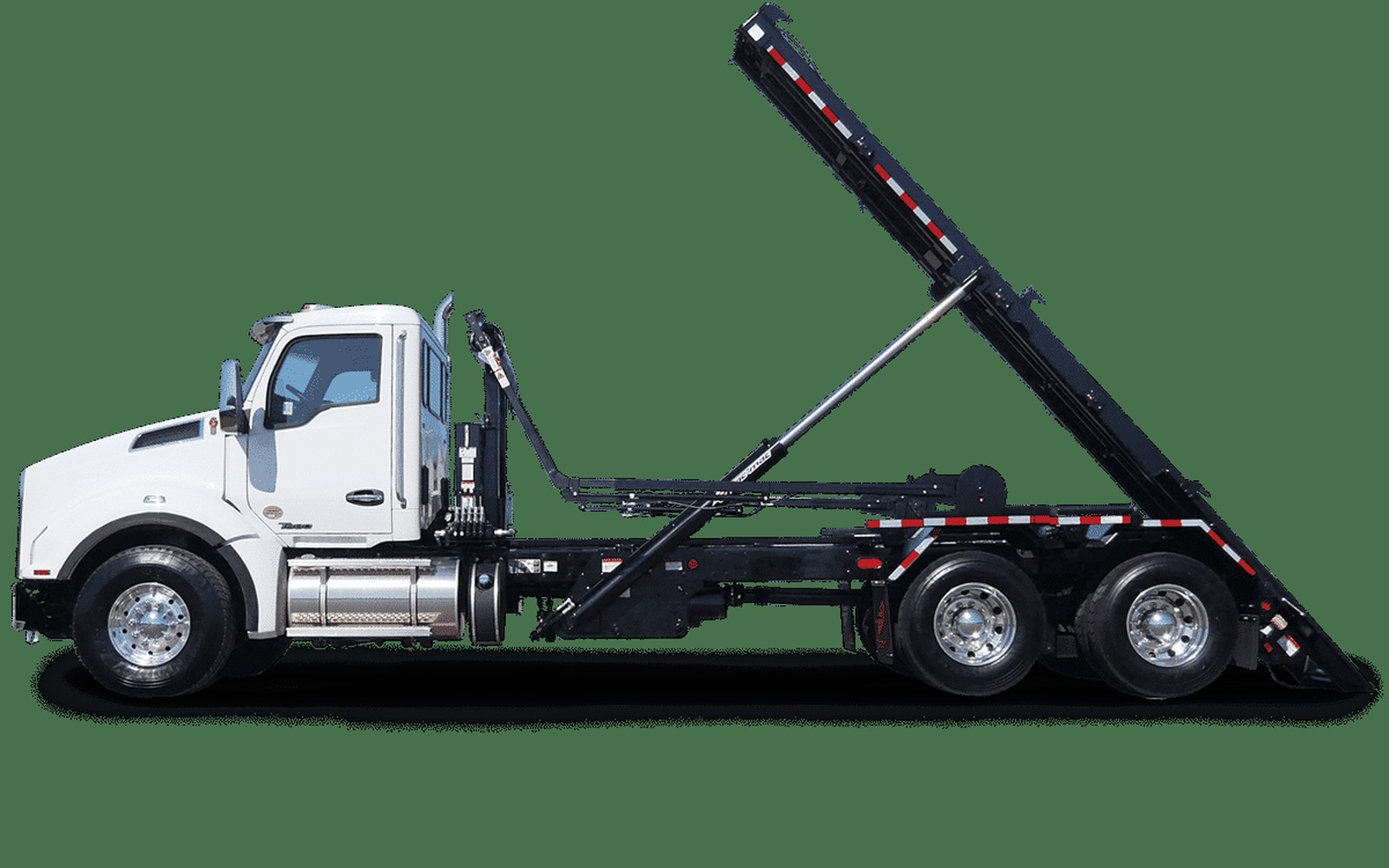
Roll-off service runs on equipment that can take the abuse of daily container swaps, and operators who have worked with Bridgeport equipment know the hoist systems are built for that kind of continuous use. Bridgeport Manufacturing has produced roll-off hoists and related refuse equipment that serves the dumpster rental, construction debris hauling, and transfer station markets. A roll-off operation's whole business model depends on the hoist working every pickup and drop, so the equipment has to be dependable through high cycle counts.
We finance Bridgeport roll-off hoists and complete truck packages for operators running dumpster rental routes, construction cleanup accounts, and commercial hauling. The transaction minimum is $50,000. Most roll-off truck packages, hoist plus chassis, run from $80,000 for a used unit to $200,000 or more for a new configured truck. We handle the full package in a single deal and fund in about one to two weeks.
Operators who run roll-off trucks on construction and demolition debris routes face payment timing that often lags the service by 30 to 60 days. Financing the truck rather than paying cash preserves working capital for fuel, container acquisition, and the gap between service delivery and invoice payment. That is where the economics of equipment financing make the most sense for this type of operation.
Bridgeport Roll-Off Hoist Systems
A roll-off hoist is a hydraulic-powered frame mounted on a straight truck chassis that loads and unloads open-top containers ranging from 10 to 40 yards. The hoist's cable system or hookarm mechanism (depending on the design) pulls the container onto the truck bed, locks it for transport, then rolls it off at the drop location. Cycle time per pickup ranges from about five to fifteen minutes depending on the driver's experience and the container's position.
Bridgeport hoist systems are built for the daily cycle demands of active dumpster rental operations. A truck doing ten to fifteen pickups per day cycles the hoist that many times. Over a year, that is 2,500 to 4,000 hoist cycles, and the mechanical components need to handle that load without chronic maintenance failures.
Container compatibility matters. Bridgeport hoists are designed to work with standard open-top container profiles, which means an operator building a Bridgeport-equipped fleet does not need to spec proprietary containers. Standard 20-yard, 30-yard, and 40-yard containers from any manufacturer work with the hoist. For operators looking at roll-off containers to purchase alongside the truck, those can often be financed in the same transaction if the combined amount meets the minimum and the total package makes sense as a single deal.
The hoist systems are available in cable-hoist and hook-arm configurations. Cable-hoist systems are more common in markets where containers have traditional cable receiver pockets. Hook-arm configurations are used where the container inventory uses hook-style receivers. The choice depends on what container inventory you are working with or planning to acquire.
Where Bridgeport Equipment Operates
Roll-off operations serve construction and demolition contractors, property managers doing cleanouts, municipalities running curbside debris programs, and commercial sites with ongoing waste generation. The roll-off dumpster rental market has grown significantly as construction activity has expanded in Sun Belt markets, and operators in those markets have added trucks and container inventory to keep up with demand.
Bridgeport equipment appears in these markets among regional and independent operators who want hoist quality without the price premium of the largest national brands. Independent roll-off operators competing against the major waste company subsidiaries need every operational cost advantage they can get, and equipment pricing is one of the controllable variables.
We finance roll-off operators of all sizes, from single-truck startups to five-truck regional operations adding capacity. Construction and demolition debris haulers make up a large share of our roll-off financing customers. The equipment serves a consistent market need and holds value reasonably well in the used market, which makes it solid collateral from a financing perspective.
Getting Approved for Bridgeport Financing
Credit profile, bank statements, and the purchase agreement are the three core documents for most Bridgeport transactions under $400,000. We work with B and C credit. An operator who has had credit challenges but runs a consistent roll-off route with good bank statement deposits has a real case to make.
For startup operators entering the roll-off market, the application process requires more documentation: personal financial statements, business plan, and any signed contracts or letters of intent from customers. Down payments are higher for startups because the business has no operating track record for the underwriter to evaluate.
Experienced roll-off operators adding a truck to a working fleet are generally straightforward approvals. Three months of bank statements showing consistent revenue from the existing operation, an application, and the purchase agreement is often the entire file. Funding follows approval by a few days for document signing and wire transfer.
For comparison on a competing roll-off hoist brand, see our Galbreath roll-off hoist financing page. Both brands finance at the same terms and the same process. The right choice comes down to what is available in your market and which dealer relationship you prefer.
Route Questions