Newark sits at the center of one of the densest industrial and commercial corridors on the East Coast. Port Newark and the Port of Elizabeth together form the Port of New York and New Jersey, which handles more containerized cargo volume than any other port complex in the northeastern United States. The warehousing and distribution belt stretching from Newark through the Meadowlands and along the New Jersey Turnpike corridor handles freight volume that generates continuous commercial and industrial waste. Operators serving that market run routes that do not stop.
New Jersey's private waste market is one of the most regulated in the country. The New Jersey Department of Environmental Protection oversees solid waste licensing, and operators must maintain DEP registration and NJDEP solid waste permits to collect commercially. The compliance burden is real, but it also creates stability: permitted operators with established routes and contracts hold a position that new entrants have difficulty replicating quickly. That contract stability is exactly what supports equipment financing.
We fund refuse trucks for Newark and New Jersey operators from $50,000 up. Application-only up to roughly $400,000. Funding in one to two weeks. Refuse truck loans, lease structures, refinancing, and sale-leaseback all available for NJ operators.
Newark's Waste Market: Port Volume, Density, and the Turnpike Corridor
Port Newark handles auto imports, container cargo, and bulk commodities that generate substantial marine-commercial and port-area industrial waste. The Foreign Trade Zone activity, warehouse operations, and logistics providers in the Ironbound district, Harrison, and the surrounding communities need reliable commercial waste service. Industrial waste services operators with port-adjacent accounts run daily routes that cannot afford equipment failures.
The New Jersey Turnpike industrial corridor from Newark south through Elizabeth, Linden, and Rahway is one of the most concentrated industrial zones on the East Coast. Refineries, chemical processors, food manufacturing, and distribution centers all generate waste streams requiring permitted commercial haulers. Operators holding those accounts carry DEP registration and run specialized equipment including roll-off trucks and front-load equipment configured for industrial container service.
The dense residential and commercial activity throughout Essex County, Hudson County, and Union County creates strong private residential and commercial collection volume as well. Commercial waste collection businesses serving Newark's commercial corridors, the restaurants and retail in Hoboken and Jersey City, and the industrial clients throughout the Turnpike belt all depend on trucks that hold their uptime.
Equipment That Qualifies
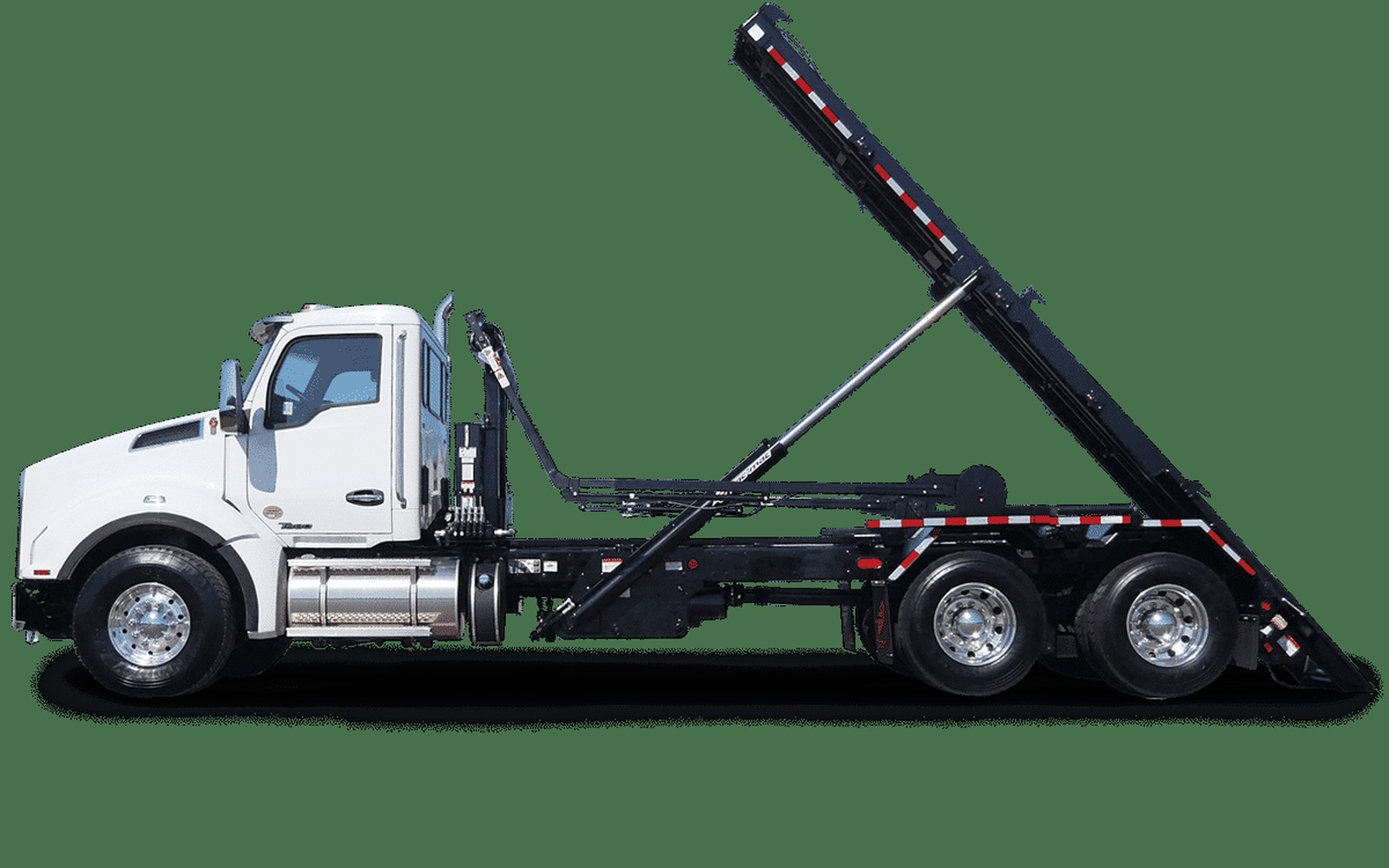
New and used refuse trucks at the $50,000 minimum. The New Jersey market uses a full range of equipment types: rear loaders for tight residential streets in older cities, front loaders for commercial accounts, roll-off trucks for construction and industrial container service, and recycling trucks for the state's mandatory recycling programs. New Jersey has required residential recycling since the 1980s, and commercial recycling requirements are robust. Recycling trucks and dual-stream recycling trucks are active in this market and qualify for financing alongside conventional refuse equipment.
CNG equipment is relevant in New Jersey given the state's air quality requirements. Port Authority operations and state-funded incentives have pushed fleet operators toward cleaner-burning equipment. A CNG refuse truck configured for the New Jersey market carries a higher price tag and fits our deal sweet spot well.
Operators with NJ DEP solid waste registration and active permits have supporting documentation that strengthens an application. A licensed NJ hauler with an established route is a different credit picture than a startup, and we price and structure deals accordingly.
Documentation and Credit
Application-only up to roughly $400,000. For NJ operators, that covers most standard truck purchases. The application needs basic business information, equipment details, and your personal guarantee. Three months of bank statements rounds out deals above that threshold or where credit complexity requires more documentation.
B/C credit financing is available. New Jersey's waste industry has operators across a wide range of credit profiles, and we review each case on the full picture. An operator with thin credit but a licensed, permitted business with active contracts has a real application to make.
We also work with operators in refinancing situations. If you have trucks with equity and want to extract working capital, a cash-out refinance or sale-leaseback provides that without requiring you to sell the equipment. For operators managing cash flow between contract payment cycles from municipalities or the port-area clients, that liquidity option is worth understanding.
Route Questions