Industrial waste contracts put more demands on equipment than almost any other refuse sector. You are pulling containers from stamping plants, chemical manufacturers, food processors, distribution hubs, and heavy fabricators. The material can range from clean cardboard and packaging to swarf, process sludge, and non-hazardous liquid waste. The truck that services a steel fabricator one morning may be running a scrap container at a stamping plant by afternoon. That operating intensity means your equipment selection and your financing both have to be built for the real workload, not a generic fleet profile.
We finance industrial waste operators who run roll-off programs at manufacturing customers, operate vacuum tankers for non-hazardous liquid waste, and provide container and packer service to industrial parks, logistics centers, and processing facilities. The financing is structured around what these operations actually generate in revenue and what the equipment actually does on a route day.
Equipment That Industrial Waste Routes Demand
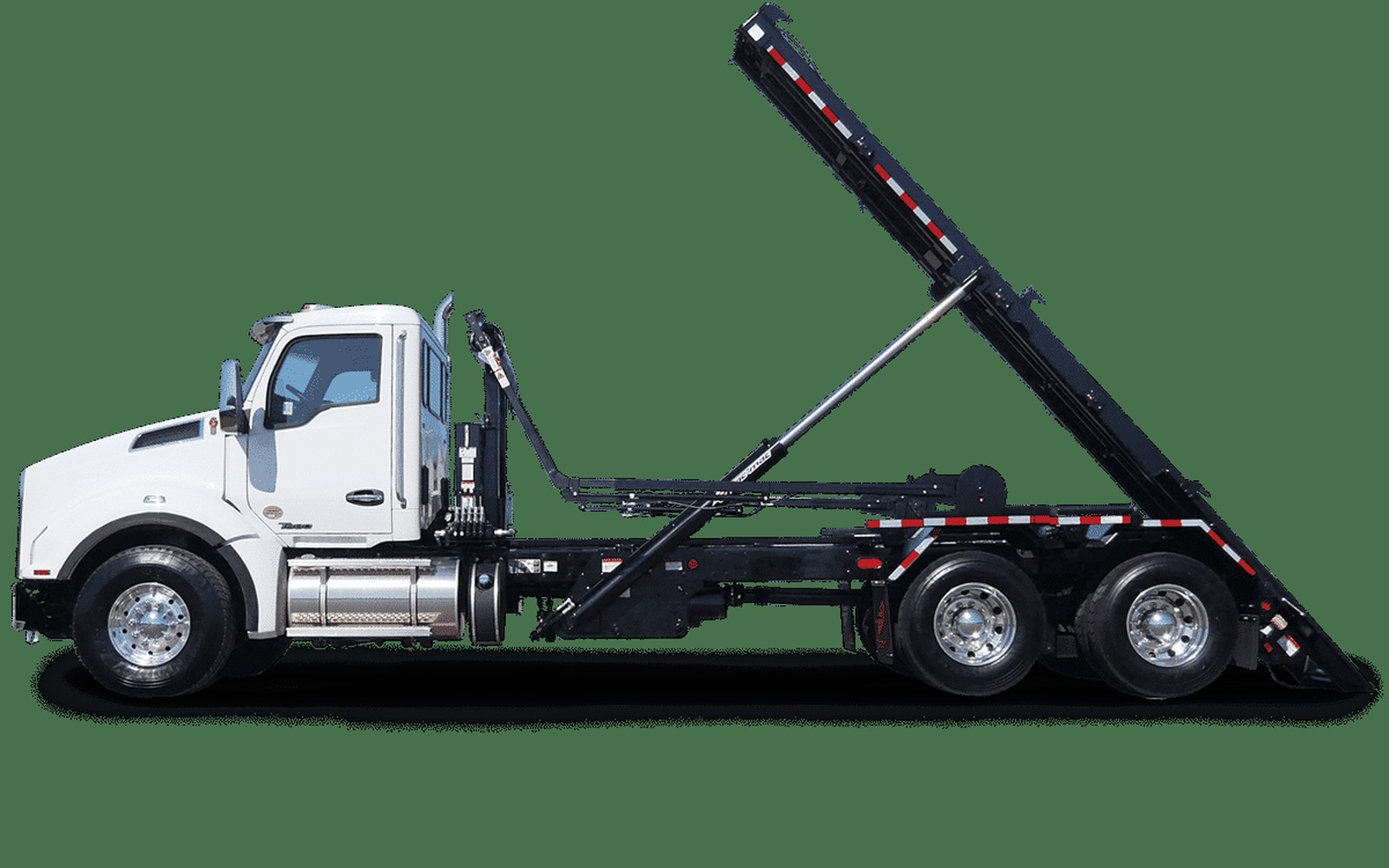
Roll-off trucks and containers are the backbone of most industrial waste programs. A manufacturer generating metal scrap, process waste, or bulky non-recyclable material needs open-top containers serviced on a pull-and-replace cycle. A roll-off truck pulling 20- and 30-yard open tops runs routes that may cover fifteen to twenty container swaps per day, and the truck has to be reliable through every one of them. We finance these trucks with equal comfort on new units from franchised dealers and quality used units from the secondary market.
Hooklift trucks serve a similar function with more flexibility. A hooklift truck can carry multiple body types on a single chassis, switching between an open-top container, a flatbed, or a liquid tank body depending on the customer's need. Industrial waste operators who serve varied manufacturing customers often find hooklift systems give them more versatility per truck than dedicated roll-offs. We finance hooklifts and the body fleet that goes with them.
For industrial facilities generating non-hazardous liquid waste (process water, coolant, wash water, tank bottoms), a vacuum tanker or combination vacuum unit is the correct tool. Industrial vacuum tankers in the 5,000- to 6,000-gallon range handle large-volume pulls from manufacturing sumps and process tanks. These are high-value assets and strong collateral, and we finance them as part of the industrial waste toolkit alongside the dry-waste roll-off fleet.
Deal Size and Term Structure for Industrial Waste Operators
Industrial waste equipment transactions tend to run larger than municipal residential deals. A new roll-off truck runs $160,000 to $240,000. A new industrial vacuum tanker runs $200,000 to $400,000 depending on tank size, pump capacity, and chassis. A hooklift system with a modest container inventory may total $200,000 to $350,000. Multi-unit purchases for a new industrial park account or a plant expansion are common, and we package those transactions to minimize documentation overhead.
Terms range from 48 to 84 months on qualified deals, with loan structures, standard leases, and TRAC leases all available. The TRAC lease structure is popular with industrial waste operators because it allows a lower monthly payment with a defined residual at end of term, giving the operator flexibility to upgrade the truck, buy it at a negotiated residual, or return it. For businesses with strong contract visibility, the lower TRAC payment can improve cash flow meaningfully during the contract period.
The Section 179 deduction and bonus depreciation are available to industrial waste operators who finance equipment purchases rather than leasing. For operators making large equipment investments in a profitable tax year, the deduction can offset a meaningful amount of the purchase cost. We are happy to discuss timing questions with your tax advisor but do not give tax advice directly.
What Qualifies for Industrial Waste Equipment Financing
The qualifying criteria for industrial waste operators are similar to those for commercial refuse haulers. We look at the business entity, its revenue base, the contract structure underlying the operation, and the equipment being financed. For deals under approximately $400,000, we work from an application and three months of bank statements. Above that threshold we review additional financials, but we do not require audited statements for most industrial waste transactions.
Credit profile matters and we accept B and C tier credits that have been declined by conventional banks. A hauler with some derogatory history but strong current revenue and solid industrial contracts has options with us that a bank drive-through window does not offer. The interest rate on a B or C credit deal will reflect the risk, but approval is achievable for operators who have a real operating business and real equipment to secure the loan.
New businesses entering the industrial waste space face more scrutiny than established operators, but a startup with a signed industrial contract and meaningful down payment (often 20 to 30 percent) can qualify through our new business startup financing program. The contract is the key underwriting anchor when business history is short.
Related Services We Finance
Industrial waste operators often work alongside other specialized hauling niches. An operator serving a food manufacturing campus may also haul food waste and organics for diversion programs that the plant is required to run under local regulations. An industrial park operator may occasionally cross into scrap metal recycling when manufacturing customers want metal scrap handled separately from general industrial waste. We finance across those adjacent categories without requiring separate applications for each equipment type.
Operators running industrial waste programs near major ports or rail yards may need waste transfer trailers for consolidation and long-haul movement. A waste transfer trailer in a roll-off or walking-floor configuration is financeable collateral, and adding trailer financing to an existing truck transaction is straightforward.
Route Questions